CAST convenes leading agricultural scientists and translates their work into credible, accessible information. We’re here to help journalists get it right.
The Council for Agricultural Science and Technology (CAST) is a nonprofit organization that assembles, interprets, and communicates credible, science-based information on food, agriculture, and natural resources. Founded in 1972 and headquartered in Ames, Iowa, CAST convenes interdisciplinary expert task forces to produce peer-reviewed publications that inform policymakers, media, industry, and the public.
CAST’s work spans three areas: plant agriculture and environmental issues, animal agriculture and environmental issues, and food science and safety. Its network includes scientists from land-grant universities, agricultural companies, scientific societies, government agencies, and international institutions.
Quick Facts
Founded: 1972
Headquarters: Ames, Iowa
Organizational type: 501(c)(3) nonprofit
Publications: 50+ peer-reviewed papers in the last 5 years
Member organizations: 60+ scientific societies, companies, nonprofits, and universities
Need an expert source? CAST can connect you with scientists across agricultural topics — plant science, food systems, animal agriculture, environmental policy, and more.
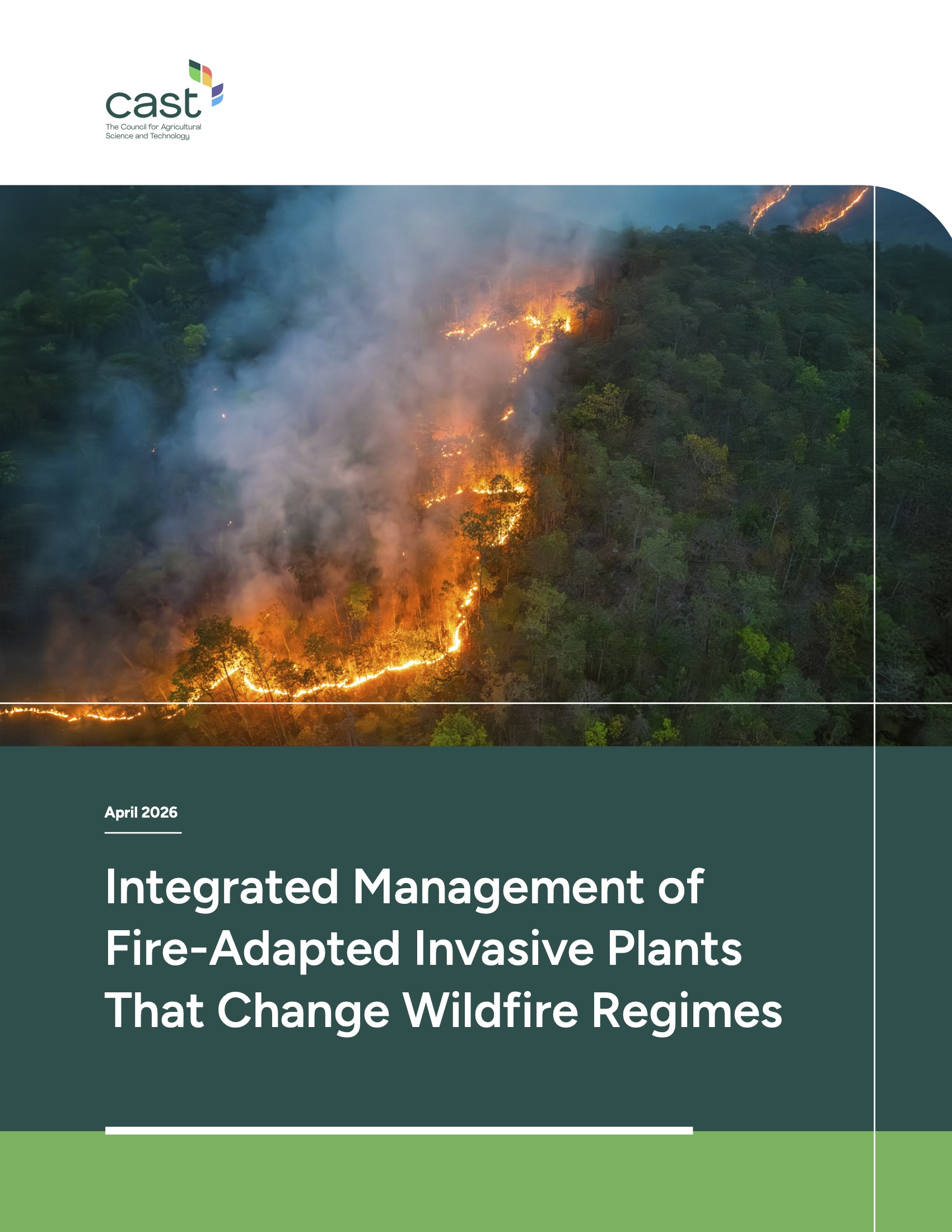
Some invasive plants, like cheatgrass and cogongrass, intensify fire cycles that favor their spread over native vegetation, while others, like Brazilian peppertree, suppress fire by crowding out native grasses and shrubs — both dynamics degrading native ecosystems and demanding science-based management.
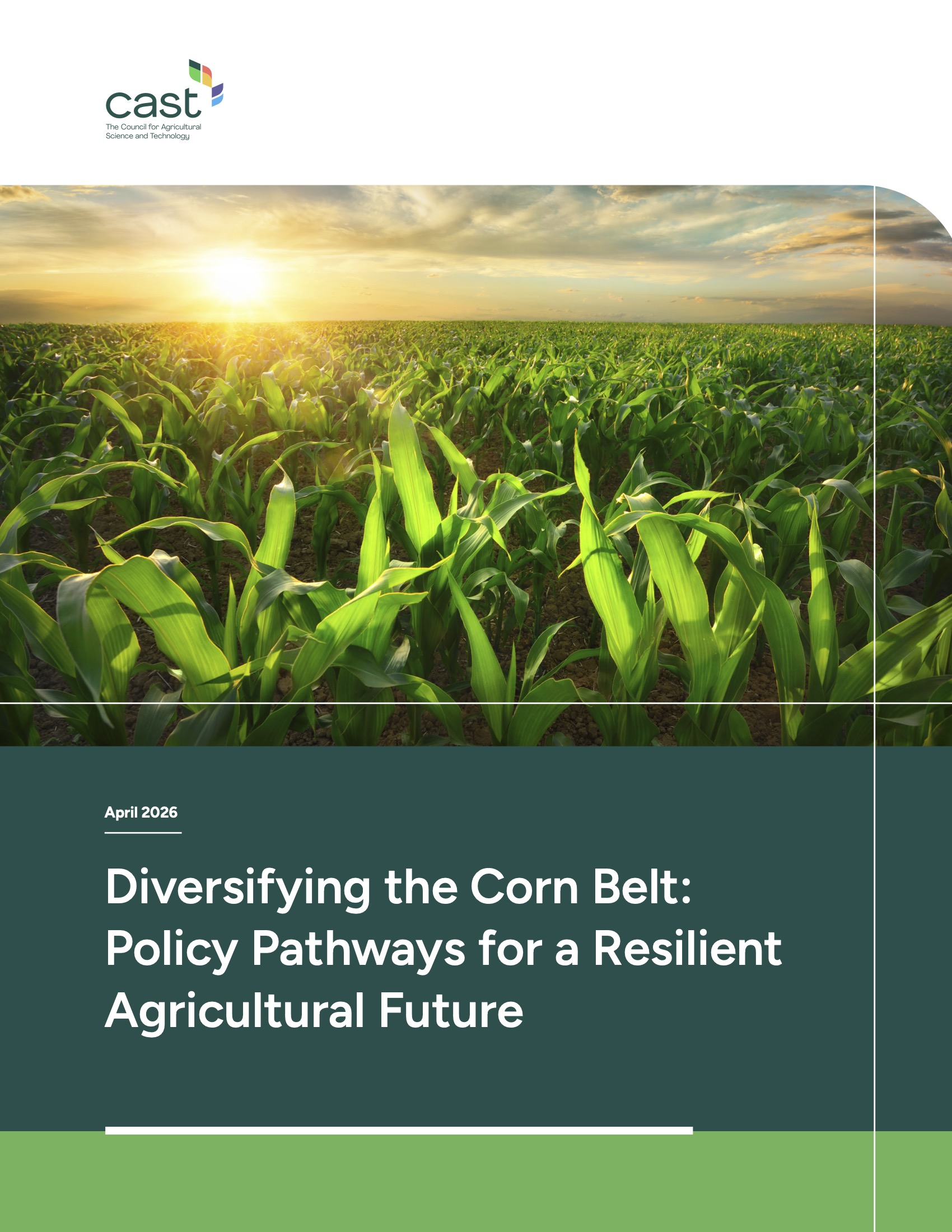
This paper presents findings from the RAD initiative, a three-year participatory research process in which farmers and agricultural stakeholders identified key diversification challenges and co-developed ranked policy opportunities evaluated on feasibility and transformative potential.
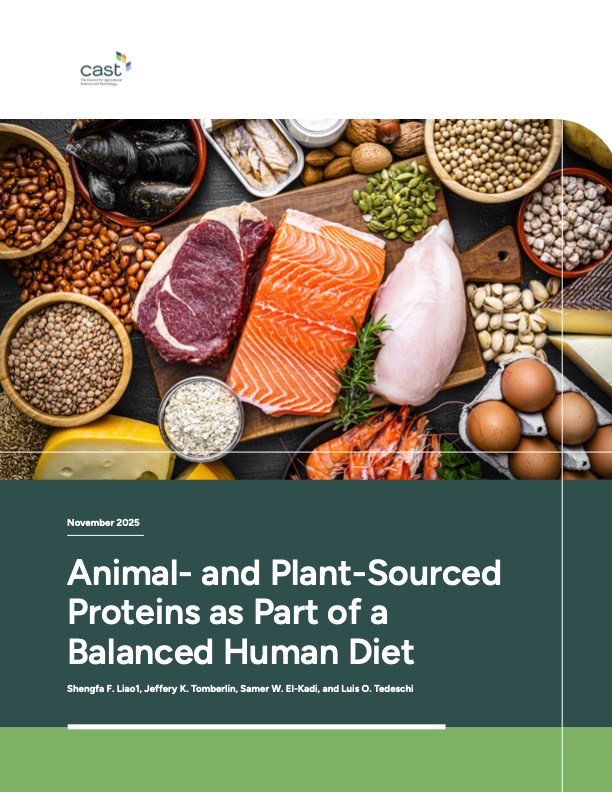
This paper reviews animal, plant, and emerging protein sources across amino acid composition, digestibility, and environmental impact, arguing that protein quality — not just quantity — matters for meeting life-stage-specific needs. It concludes that dietary diversity across protein sources, rather than exclusive reliance on any one, is essential for human health and resilient food systems.