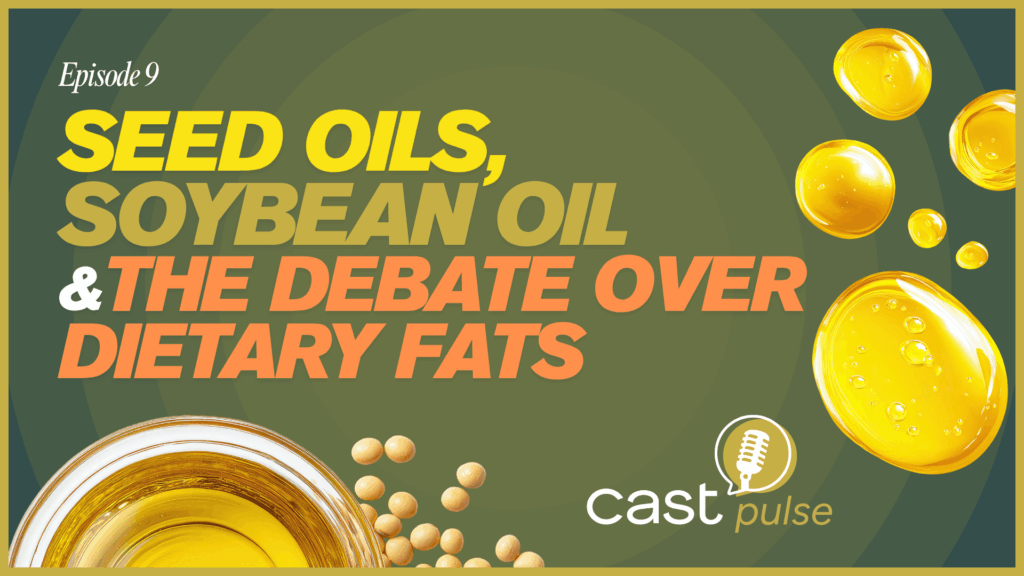

Seed oils — canola, corn, soybean, safflower, and others pressed from plant seeds — are among the most widely consumed edible oils in the United States and around the world. In recent years, they’ve become one of the most debated topics in nutrition, with strong opinions on both sides and a large volume of conflicting information circulating online and in state legislatures.
In this episode, CAST’s Programs and Engagement Manager Kaylee Kleitsch speaks with two guests who have spent years studying and communicating this topic: registered dietitian Melissa Joy Dobbins and soy nutrition researcher Mark Messina. They discuss what seed oils actually are, what the science says about their effects on cardiovascular health, and how to think about the claims circulating in media and online.
Key topics covered:
- What seed oils are (and what they aren’t)
- Why seed oils became controversial — and how the arguments hold up against the evidence
- The inflammation question: why the mechanism argument doesn’t match the clinical data
- Cardiovascular evidence: meta-analyses, clinical trials, and the AHA findings
- Soybean oil’s role in the U.S. food supply (>7% of total caloric intake)
- The FDA qualified health claim for canola, corn, and soybean oils
- The omega-6 to omega-3 ratio — why established health organizations say it’s not a useful metric
- Practical guidance: what to do (and not do) with seed oils in everyday cooking
About the Guests
Melissa Joy Dobbins
Registered Dietitian, Certified Diabetes Educator. Host of the Sound Bites podcast (11+ years). Known for translating nutrition science for consumer audiences.
Mark Messina
Senior Research Fellow, Soy Nutrition Institute Global. Has studied soy foods and soybean components — including soybean oil — since the early 1990s. Has published peer-reviewed work specifically on seed oils and polyunsaturated fat.