CAST papers are developed by interdisciplinary task forces composed of volunteer authors, chairs, reviewers, liaisons, and translators from academia, industry, and government. This index recognizes those contributors and highlights the breadth of expertise that supports CAST’s work.

David L. Meeker

Publications as Author
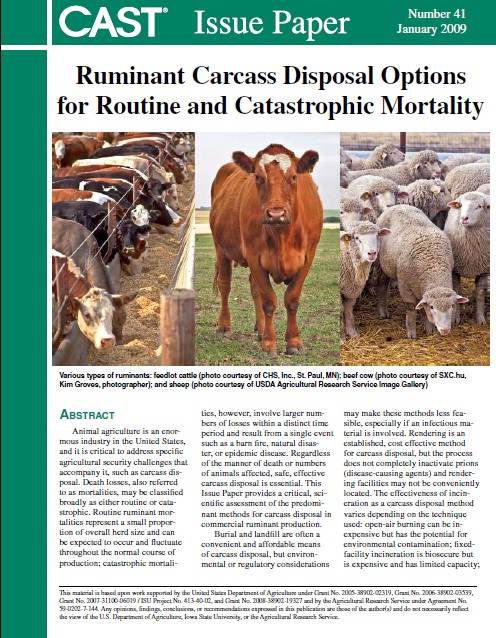
CAST-IP41_Cattle-Carcass.jpg
When selecting a carcass disposal method, producers must consider the number of mortalities, cause of death, potential infectious agents, environmental implications, regulatory requirements, and costs. This Issue Paper provides a comprehensive summary of the scientific, technical, and social aspects of ruminant carcass disposal technologies, drawing on a Kansas State University report. The authors discuss predominant methods including burial and landfill, rendering, composting, incineration, and alkaline hydrolysis, with an appendix addressing special considerations for disease-infected material.
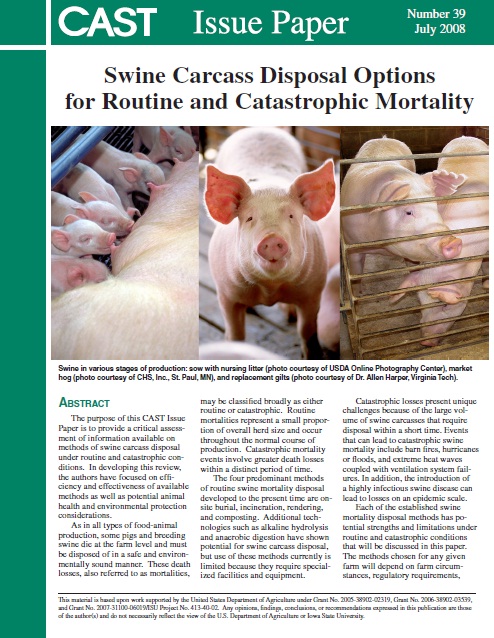
CAST-IP39_Swine-Carcass.jpg
This Issue Paper provides a critical assessment of information available on methods of swine carcass disposal under routine and catastrophic conditions. The authors have focused on efficiency and effectiveness of available methods as well as potential animal health and environmental protection considerations. The paper addresses the four predominant methods of mortality disposal in commercial swine production–burial, incineration, rendering, and composting–and various alternative and nontraditional methods and technologies.
Publications as Reviewer
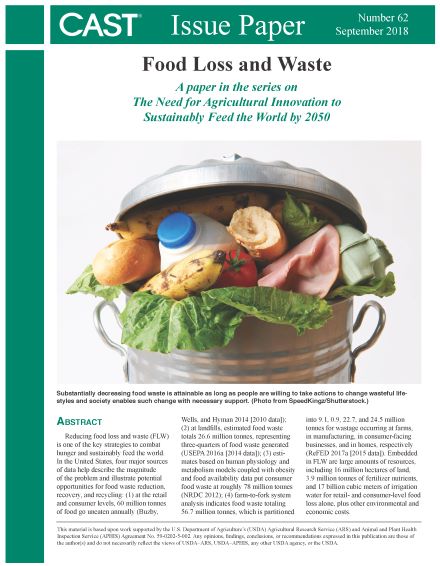
CAST-IP62-Food-Loss-Waste-cover2.jpg
Reducing food loss and waste (FLW) is a key strategy for combating hunger and sustainably feeding a growing world. In the U.S., an estimated 56–78 million tonnes of food are wasted annually across the farm-to-fork system, embedding large amounts of land, fertilizer, and water. Contributing factors vary by food system stage, involving market forces, social norms, and human behavior. Current efforts recover or recycle roughly 19 million tonnes annually, mostly at the manufacturing stage. Critical needs include quantitative assessment of composting programs, technologies converting food waste to safe animal feed, and behavior-change interventions targeting consumers.