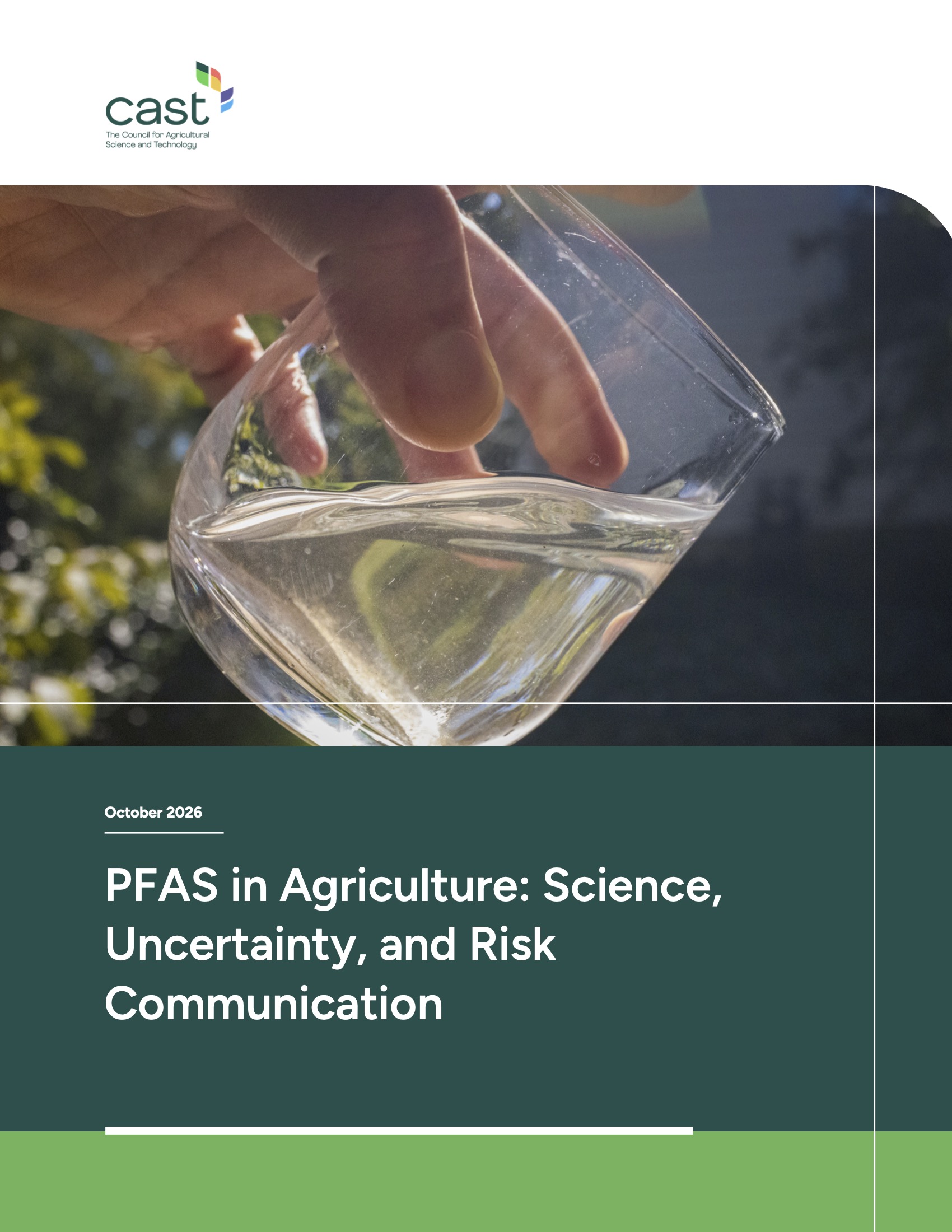
PFAS, often called “forever chemicals,” are a growing regulatory and economic challenge for agriculture, even though farms usually sit downstream from contamination sources such as biosolids, compost, irrigation water and industrial sites. This paper argues that treating thousands of chemically diverse compounds as one uniform hazard distorts policy and penalizes farmers. Detection is not the same as risk: the strongest health evidence centers on a few compounds, mainly PFOA and PFOS. The authors review federal and state regulation, litigation and EPA’s 2026 draft biosolids guidance, and recommend source control, strategic testing, compound-by-compound interpretation, documentation and early, credible risk communication.