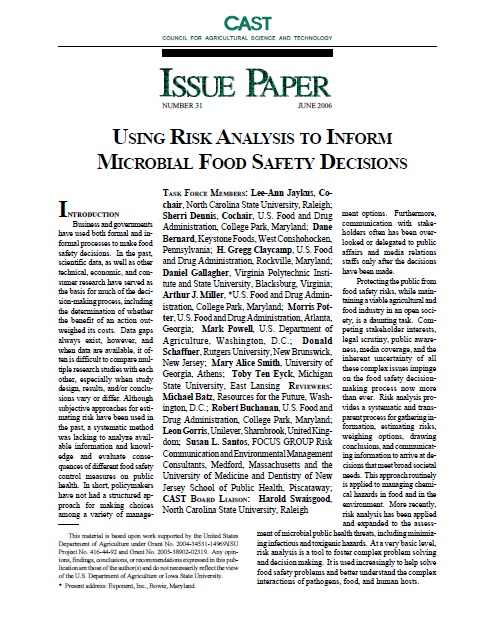
Protecting the public from food safety risks, while maintaining a viable agricultural and food industry in an open society, is a daunting task. Risk analysis provides a systematic and transparent process for gathering information, estimating risks, weighing options, drawing conclusions, and communicating information to arrive at decisions that meet broad societal needs. This paper identifies and defines the components of a valid microbial risk analysis and focuses attention on risk assessment strategies, highlighting the strengths and weaknesses of each.