CAST papers are developed by interdisciplinary task forces composed of volunteer authors, chairs, reviewers, liaisons, and translators from academia, industry, and government. This index recognizes those contributors and highlights the breadth of expertise that supports CAST’s work.

Robert Wilson

Publications as Author
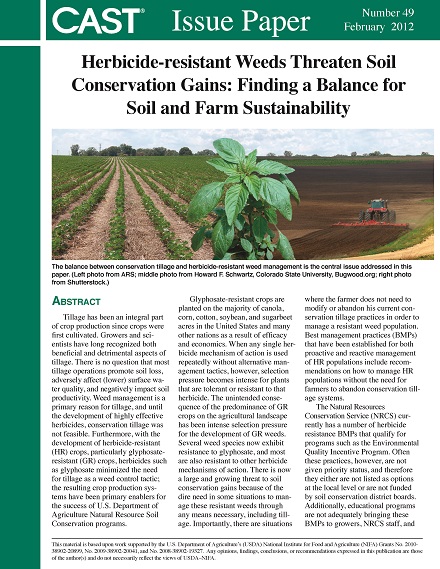
CAST-IP49_Tillage.jpg
Herbicides were developed during the twentieth century to be used with conventional tillage for weed control. Conservation (or minimum) tillage subsequently evolved, which enabled less soil damage when used with herbicides. Selection pressure, however, has resulted in weed species that have made adaptations for survival in conjunction with tillage. The U.S. government has put several federal policies and programs in place that help determine the selection and implementation of crops and conservation programs in relation to herbicides and tillage. This Issue Paper (IP 49) examines the impact of certain weed management practices on soil conservation objectives and addresses ways to mitigate negative effects.
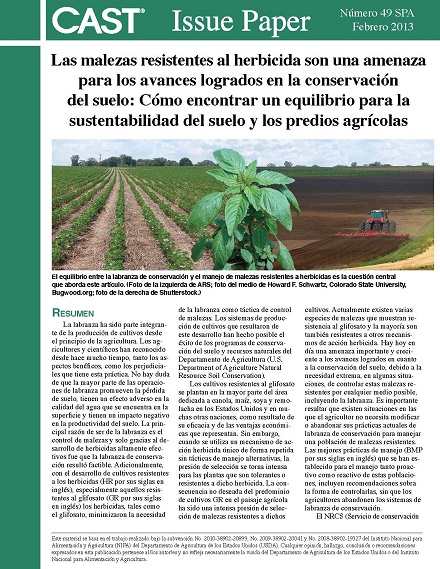
CAST-IP49-SPA.jpg
Los herbicidas se desarrollaron para usarse con la labranza convencional en el control de malezas, y posteriormente la labranza de conservación permitió menor daño al suelo cuando se utilizaba con herbicidas. Sin embargo, las presiones de selección han producido especies de malezas adaptadas para sobrevivir junto con la labranza. El gobierno de EEUU ha establecido programas y políticas para orientar la selección e implementación de estrategias de control de malezas y conservación. Este artículo examina el impacto de ciertas prácticas de control de malezas en los objetivos de conservación del suelo y aborda formas de mitigar sus efectos negativos.