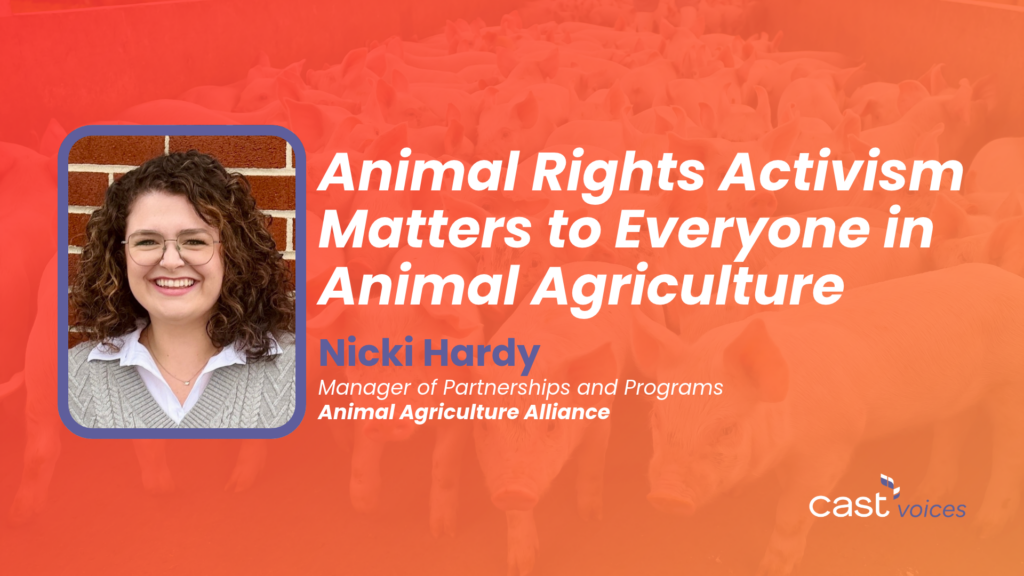

By Nicki Hardy | Manager of Partnerships and Programs, Animal Agriculture Alliance
Animal rights activism often brings to mind protests, undercover videos and farm disruptions, but its influence extends far beyond farms and processing plants. Whether you work in production, animal health, nutrition, communications, foodservice or another part of the supply chain, activism can affect your work and the industry’s future.
Animal rights activism encompasses a broad network of organizations and individuals working to change how animals are used in society, often with the ultimate goal of ending animal agriculture. While their strategies and approaches vary, many groups seek to influence consumer behavior, corporate policies and legislation to advance their objectives.
Understanding the distinction between animal rights and animal welfare is an important starting point. Animal welfare focuses on the humane care and well-being of animals, ensuring their physical and behavioral needs are met. Animal rights, on the other hand, generally centers on the belief that animals should not be used for human purposes, including food production, regardless of the conditions in which they are raised. Recognizing this distinction helps agricultural professionals better understand the motivations behind activist campaigns and their potential long-term implications.
Why Animal Agriculture Needs to Pay Attention
Although animal rights activism is often viewed as an issue primarily affecting farmers and processors, its influence reaches throughout the agricultural supply chain. Campaigns targeting restaurants, retailers and food companies can influence supplier requirements, production practices and business decisions that ultimately affect producers and the many industries supporting them. Even organizations that are never directly targeted can experience the ripple effects of these campaigns.
Public perception is another important consideration. Activist campaigns frequently use emotionally compelling messaging to influence how consumers view animal agriculture. As consumers become increasingly removed from food production, these messages can shape purchasing decisions, consumer trust and broader perceptions of the industry. Building and maintaining trust requires agricultural professionals across all sectors to help communicate accurate information about animal care and modern production practices.
Legislation and public policy can also have far-reaching implications. Animal rights organizations increasingly engage in legislative advocacy to influence how animals are raised, housed and managed. Changes to agricultural policies can create economic and operational challenges that extend beyond the farm, affecting research, animal health, technology development and other areas of the food supply chain. When policies are developed without a full understanding of agricultural practices and their implications, the consequences can reach well beyond their intended targets.
Understanding Current Activist Trends and Tactics
Recognizing the broader impacts of activism is only part of the equation. Understanding how activist organizations operate and the strategies they use is equally important.
Two notable trends are the continued focus on corporate pressure campaigns and efforts to influence legislation. By targeting restaurants, retailers and major food brands, activist organizations seek to change corporate sourcing policies and purchasing requirements, potentially influencing production practices throughout the supply chain.
Legislative efforts can follow a similar approach, often beginning with narrowly focused issues, such as restrictions on foie gras production or sales. These campaigns can establish precedents and build momentum for broader policy changes affecting animal agriculture.
These efforts are supported by increasingly coordinated networks of organizations with significant financial resources. The Animal Agriculture Alliance developed the Major Animal Activist Groups Web to highlight the connections among major animal activist organizations and has identified more than $1 billion in combined annual revenue across the groups examined. Through shared funding, personnel and collaborative campaigns, organizations can coordinate strategies and pursue long-term objectives.
Activist organizations are also using digital platforms, social media and emerging technologies to expand their reach, amplify messaging and engage consumers and decisionmakers. Together, these approaches allow campaigns to extend beyond individual farms or businesses and influence conversations about animal agriculture on a much broader scale.
How Can You Be a Voice for Animal Agriculture?
With these trends in mind, everyone working in animal agriculture has an opportunity to contribute to a more informed public conversation about the industry.
Staying informed is an important first step. Following industry developments, proposed legislation and current activist campaigns can help agricultural professionals recognize emerging issues and better understand their potential impacts at both the local and national levels.
Sharing accurate, accessible information is equally valuable. Whether speaking with a consumer, connecting with a community leader or engaging with a policymaker, agricultural professionals can help others better understand animal care, production practices and the people behind our food system. These conversations do not need to be complicated to make a difference. Providing a knowledgeable perspective and answering questions can help build understanding and trust.
Supporting industry partners also plays an important role. Collaboration across agricultural sectors, engagement with industry organizations and support for those experiencing activist pressure can strengthen the industry’s ability to address shared challenges. Knowing where to find reliable information and resources before an issue arises can also help individuals and organizations respond more effectively.
Looking Ahead
Animal rights activism is not an issue limited to those working directly with animals or facing activist campaigns. Its influence on consumer perceptions, business decisions and public policy means the entire agricultural community has a stake in understanding the movement and its objectives.
Regardless of your role in agriculture, staying informed and engaged can make a difference. By sharing accurate information, supporting industry partners and working together across the food supply chain, agricultural professionals can help strengthen public understanding, address emerging challenges and safeguard the future of animal agriculture.
The opinions expressed in this article are solely those of the author. They do not necessarily represent the views, positions, or policies of the Council for Agricultural Science and Technology (CAST). CAST provides this space to encourage thoughtful discussion, but does not endorse any specific viewpoints shared in these pieces.