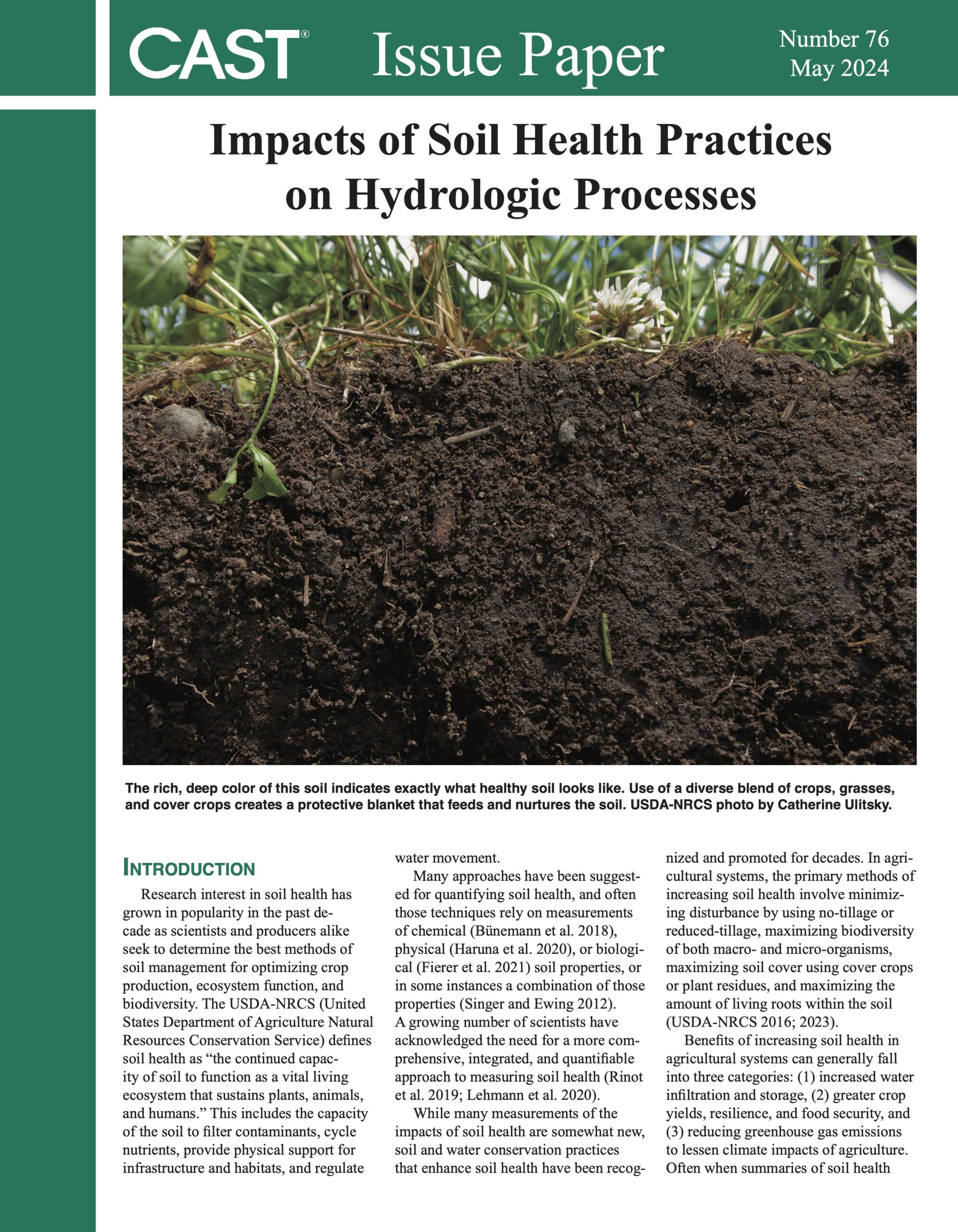
Impacts of Soil Health Practices on Hydrologic Processes

Task Force Chairs

– 

Texas A&M University
Authors

– 

Iowa State University

– 

National Laboratory for Agriculture and the Environment (retired)

– 

United States Department of Agriculture

– 

The Ohio State University

– 

The Nature Conservancy

– 

University of Illinois Urbana-Champaign
Abstract
Soil health, defined as the continued capacity of soil to function as a vital living ecosystem, plays a critical role in agricultural productivity, water quality, and climate resilience. This paper synthesizes current research on the impacts of soil health practices—such as reduced tillage, cover cropping, and residue management—on hydrologic processes within agricultural and urban systems. These practices influence water infiltration, storage, and movement through the soil-water-atmosphere continuum, reducing runoff, erosion, and surface water contamination while potentially moderating flood risks. Enhanced soil organic matter (SOM) and aggregate stability improve water holding capacity and infiltration, contributing to drought resilience and crop productivity. However, effects on groundwater recharge remain uncertain due to limited long-term data. The paper also explores the interplay between soil health and climate change, highlighting how improved soil management can mitigate adverse hydrologic impacts of extreme weather events. Policy implications emphasize adaptive governance and integration of farmer-led and indigenous practices to scale soil health adoption. Overall, soil health practices offer significant potential to enhance ecosystem services, water quality, and societal resilience in the face of climate variability.
Downloads & Resources

Full Paper

Summary

Webinar

Webinar Slides

More Task Force
Reviewers
CAST Liaisons
Translators