CAST papers are developed by interdisciplinary task forces composed of volunteer authors, chairs, reviewers, liaisons, and translators from academia, industry, and government. This index recognizes those contributors and highlights the breadth of expertise that supports CAST’s work.

Todd Peterson

Publications as Reviewer
COVID-Impacts
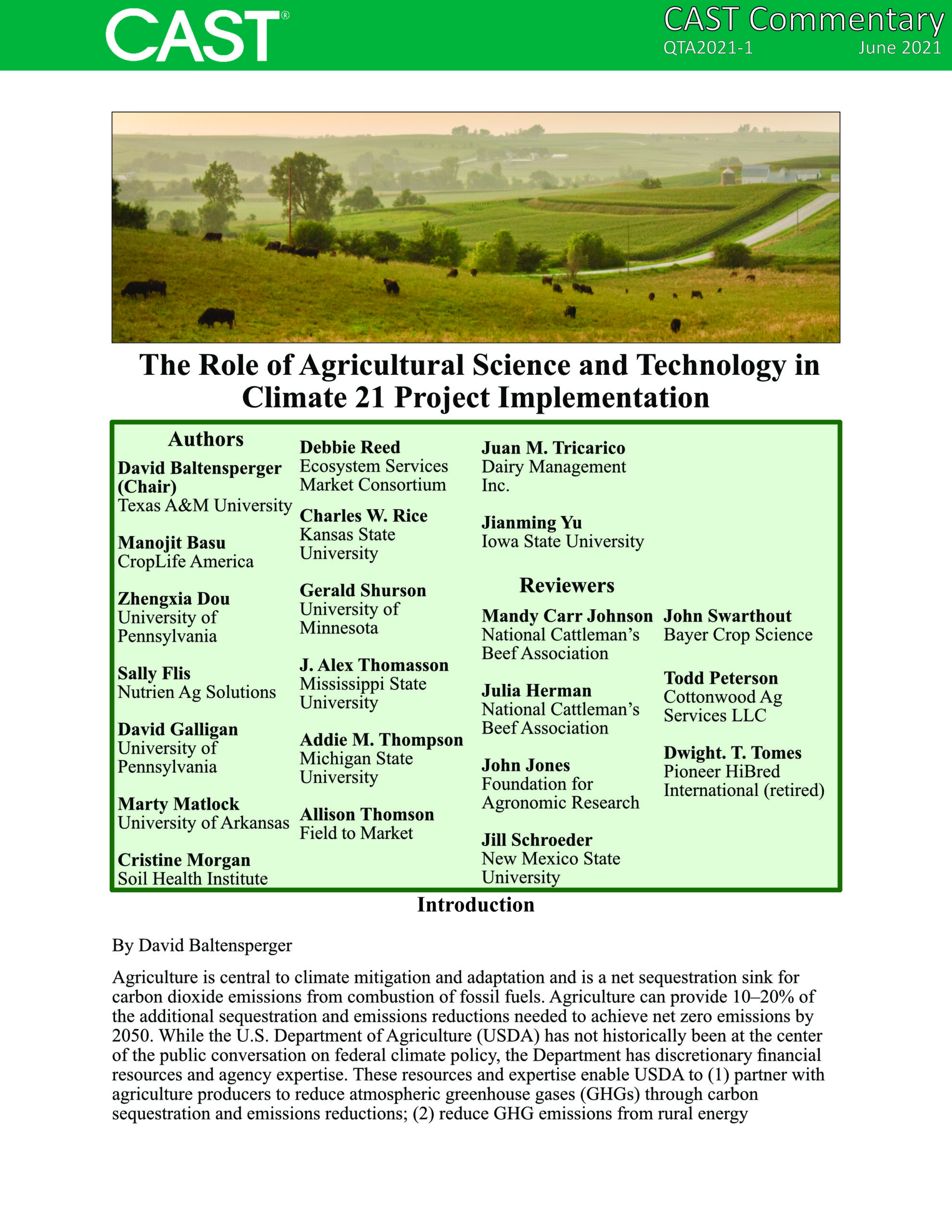
This commentary evaluates how agricultural science and technology can support implementation of the federal Climate 21 Project, which positions the U.S. Department of Agriculture as a central actor in national climate mitigation and resilience strategies. Agriculture and forestry are highlighted as the only major sectors capable of becoming net greenhouse gas sinks, offering substantial potential to help the United States reach net‑zero emissions by 2050 through soil carbon sequestration, improved nutrient management, reduced tillage, and strengthened crop and livestock systems.
Publications as CAST Liaison
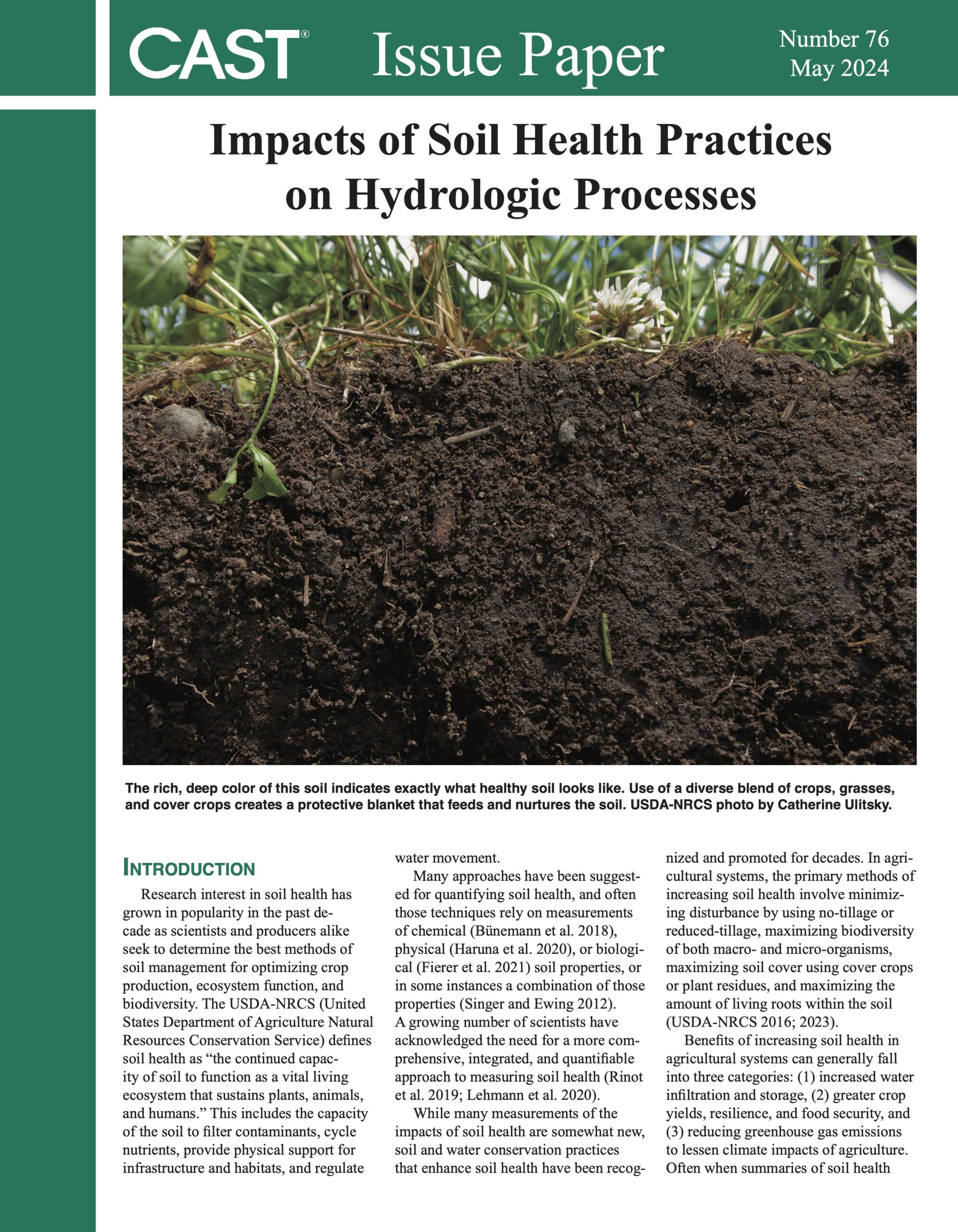
IP76-Soil-Health-scaled-1.jpg
This paper synthesizes current research on the impacts of soil health practices—such as reduced tillage, cover cropping, and residue management—on hydrologic processes within agricultural and urban systems. These practices influence water infiltration, storage, and movement through the soil-water-atmosphere continuum, reducing runoff, erosion, and surface water contamination while potentially moderating flood risks.
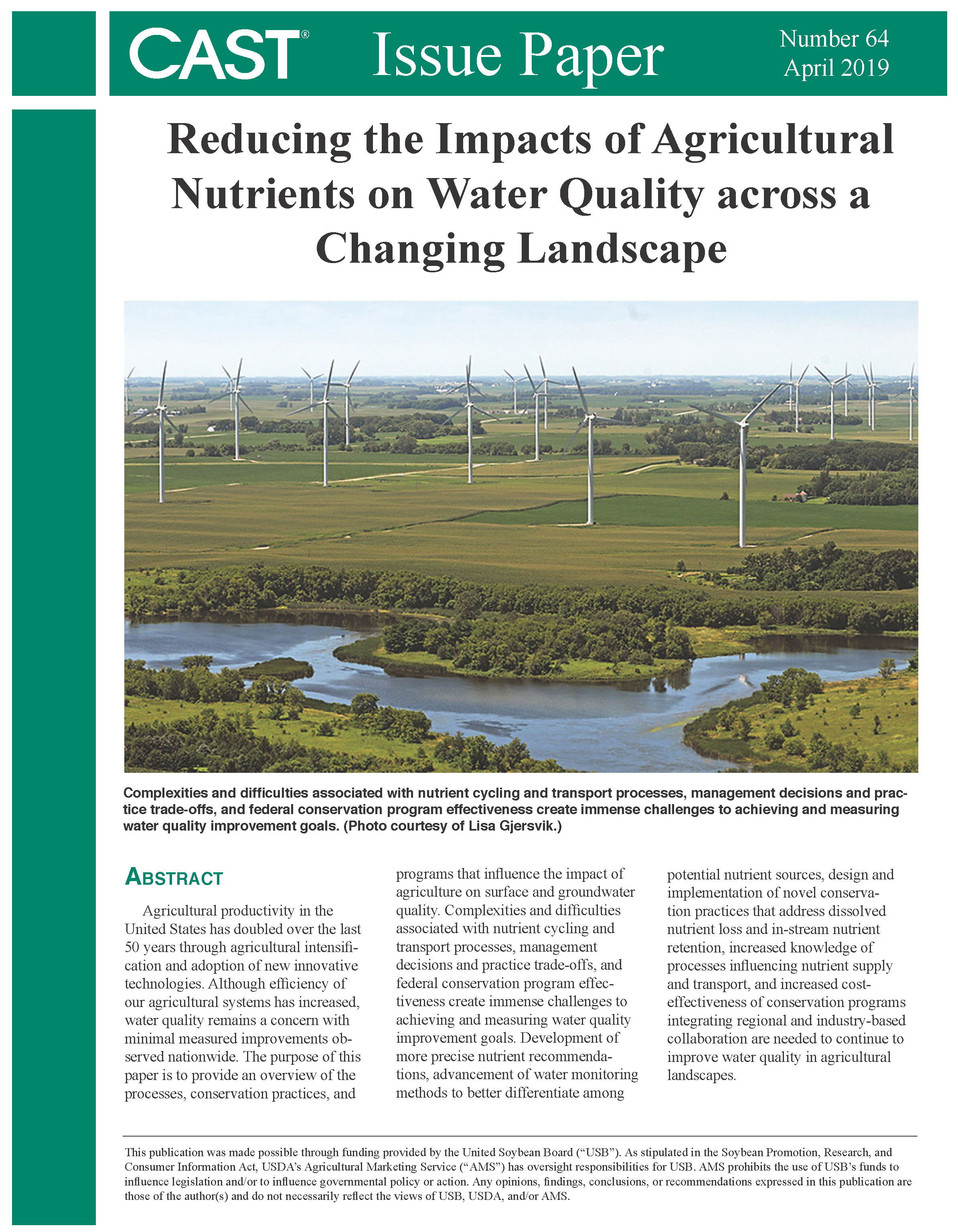
IP64_Nutrient-Loss-cover-image-1.png
U.S. agricultural productivity has doubled over the past 50 years, but water quality improvement has been minimal despite increased efficiency. This paper reviews the processes, conservation practices, and programs influencing agriculture's impact on surface and groundwater quality, examining the complexities of nutrient cycling, management trade-offs, and federal conservation program effectiveness. Key needs identified include more precise nutrient recommendations, improved water monitoring methods, novel conservation practices addressing dissolved nutrient loss, and greater cost-effectiveness through regional and industry collaboration.
QTA2017-1-Bee-Health.jpg
Pollinators are responsible for about 1/3 of our human diet by volume. Although honey bees are one of nearly 20,000 bee species, they support more than $19B in food and crop production in the United States each year. A serious decline in honey bee health has significant implications for agriculture. This paper provides a summary of the scientific issues, current research, and recommendations related to bee health, as well as opportunities for beekeepers, land managers, crop producers, homeowners, and policymakers to engage in helping understand and address the problems to ultimately restore healthy populations of honey bees and other pollinators.
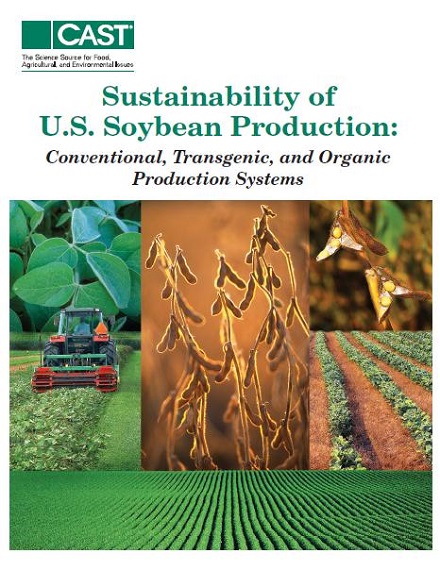
CAST-SP30_US-Soybean-Production.jpg
This CAST Special Publication documents the ecological and economic implications of the various systems used in U.S. soybean production. Soybean production has changed in the United States since its first introduction in the mid-1880s. Initially, the crop was produced mainly for forage and received only minimal inputs. Today, soybeans have become a major source of protein in animal diets and vegetable oils for human consumption. Considering this dramatic change, CAST is providing a comprehensive literature review that evaluates U.S. soybean production systems currently in use with respect to their environmental and economic sustainability.
QTA2007-2-Convergence-2.jpg
This new Commentary provides a scientific assessment of the production potential and regional impacts of large-scale cellulosic ethanol production. It discusses the need for national investments and policy changes to address challenges limiting the production and efficient use of cellulosic biomass as a fuel feedstock to meet U.S. needs.