CAST papers are developed by interdisciplinary task forces composed of volunteer authors, chairs, reviewers, liaisons, and translators from academia, industry, and government. This index recognizes those contributors and highlights the breadth of expertise that supports CAST’s work.

Marty Matlock

Affiliation
University of Arkansas at Fayetteville
Title/Position
Professor, Biological and Agricultural Engineering
Bio

Publications as Task Force Chair
LCA-Cover.png
This paper examines the goals, strengths, and limitations of using Life Cycle Assessment (LCA) within food and agricultural systems. It outlines how LCA provides a systematic, science‑based approach for quantifying environmental impacts across complex agricultural supply chains, enabling improved decision-making, transparency, and sustainability performance.
Publications as Author
USFRA_CAST-FullReport
This report explores the potential for U.S. agriculture to achieve greenhouse gas (GHG) neutrality or become GHG-negative by integrating current and emerging practices across crop and livestock systems. The analysis identifies five major opportunity areas: soil carbon management, nitrogen fertilizer management, animal production and manure handling, crop production efficiency, and on-farm energy use. The report emphasizes the need for on-farm demonstrations, technical support, and policy incentives to overcome economic and technological barriers.
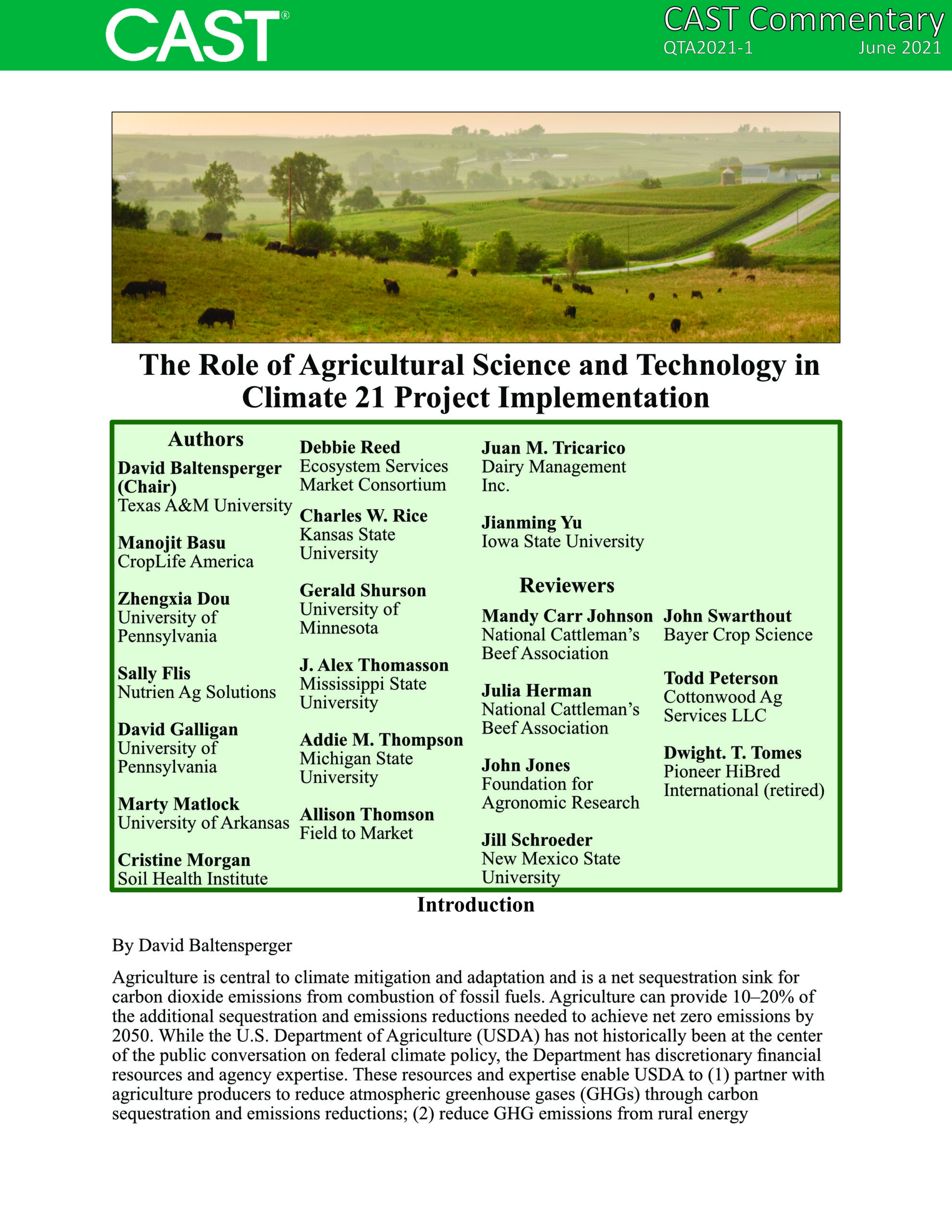
COVID-Impacts
This commentary evaluates how agricultural science and technology can support implementation of the federal Climate 21 Project, which positions the U.S. Department of Agriculture as a central actor in national climate mitigation and resilience strategies. Agriculture and forestry are highlighted as the only major sectors capable of becoming net greenhouse gas sinks, offering substantial potential to help the United States reach net‑zero emissions by 2050 through soil carbon sequestration, improved nutrient management, reduced tillage, and strengthened crop and livestock systems.
Publications as Reviewer
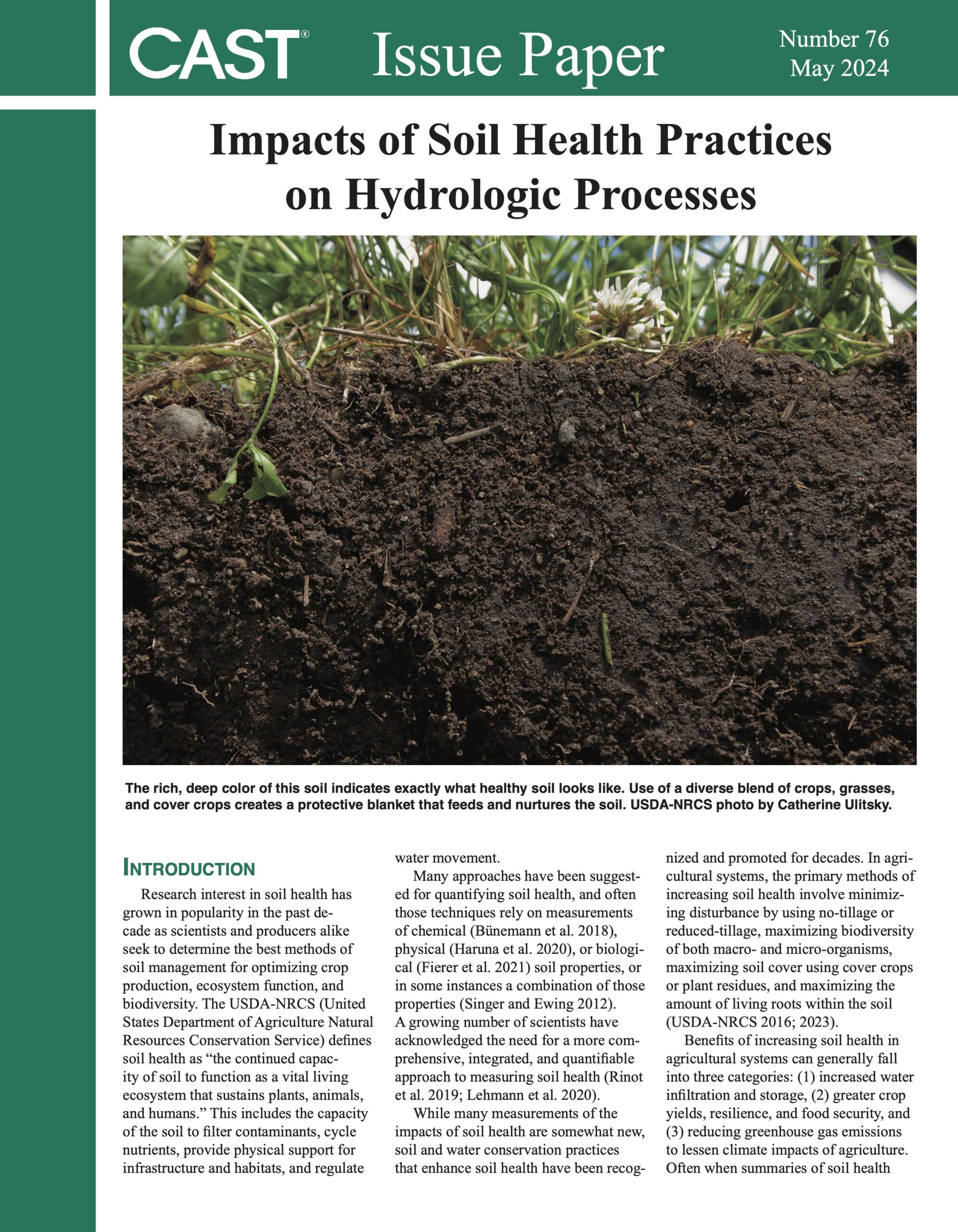
IP76-Soil-Health-scaled-1.jpg
This paper synthesizes current research on the impacts of soil health practices—such as reduced tillage, cover cropping, and residue management—on hydrologic processes within agricultural and urban systems. These practices influence water infiltration, storage, and movement through the soil-water-atmosphere continuum, reducing runoff, erosion, and surface water contamination while potentially moderating flood risks.