CAST papers are developed by interdisciplinary task forces composed of volunteer authors, chairs, reviewers, liaisons, and translators from academia, industry, and government. This index recognizes those contributors and highlights the breadth of expertise that supports CAST’s work.

David Baltensperger

Affiliation
Texas A&M University
Publications as Task Force Chair
COVID-Impacts
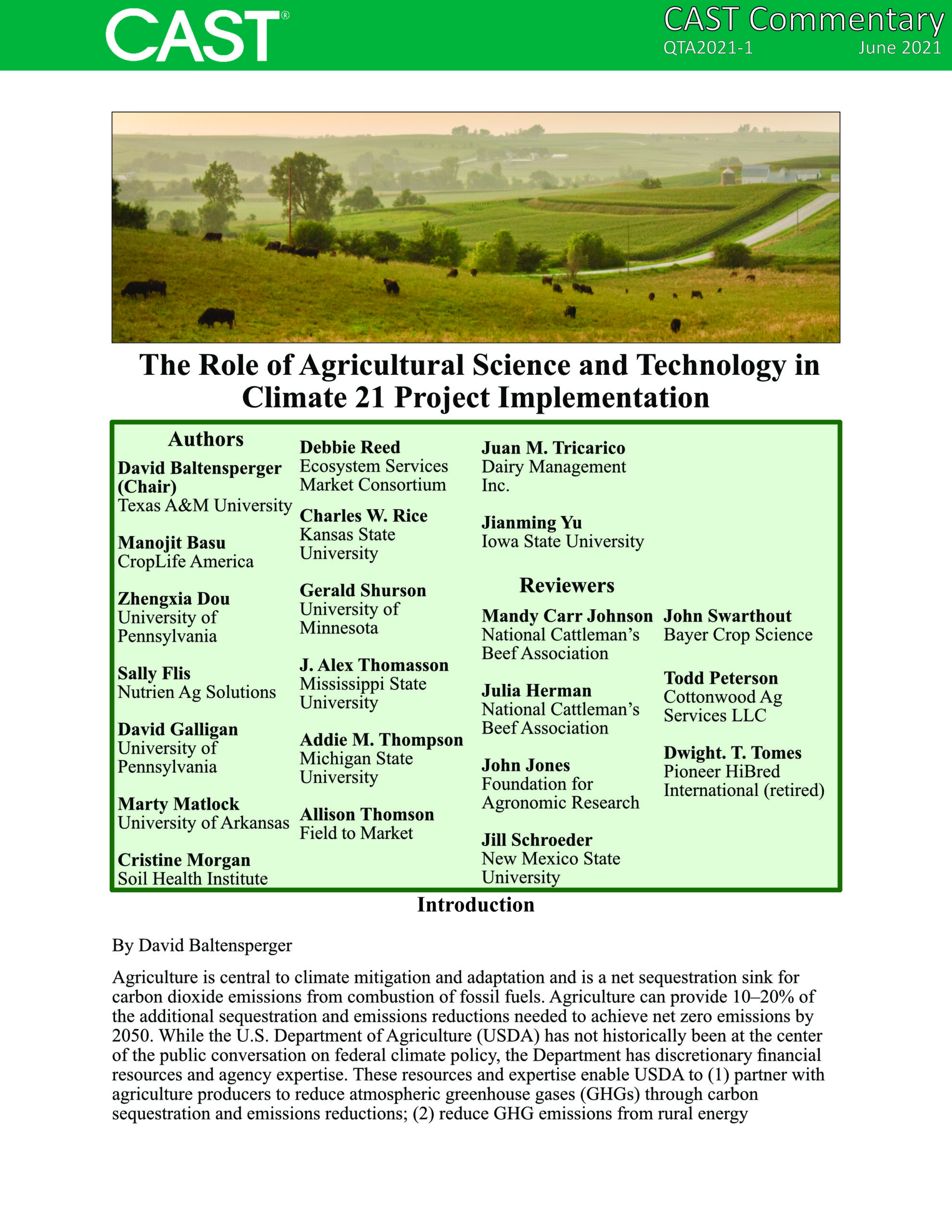
This commentary evaluates how agricultural science and technology can support implementation of the federal Climate 21 Project, which positions the U.S. Department of Agriculture as a central actor in national climate mitigation and resilience strategies. Agriculture and forestry are highlighted as the only major sectors capable of becoming net greenhouse gas sinks, offering substantial potential to help the United States reach net‑zero emissions by 2050 through soil carbon sequestration, improved nutrient management, reduced tillage, and strengthened crop and livestock systems.
Publications as Reviewer
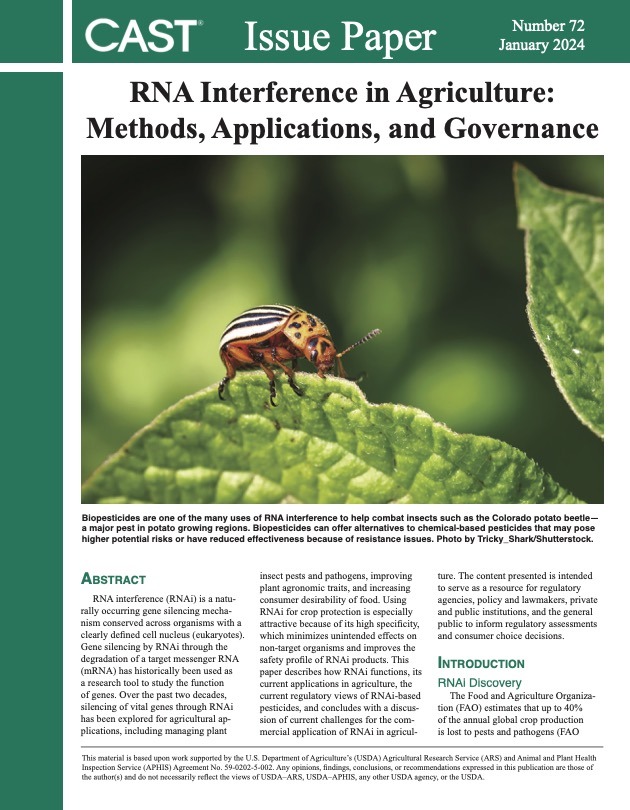
CAST_IP72_RNAi.jpg
This paper explains RNAi mechanisms, current agricultural applications, regulatory perspectives on RNAi-based pesticides, and challenges for commercialization. It aims to inform regulatory agencies, policymakers, industry stakeholders, and the public for better decision-making regarding RNAi technologies in agriculture.
Publications as CAST Liaison
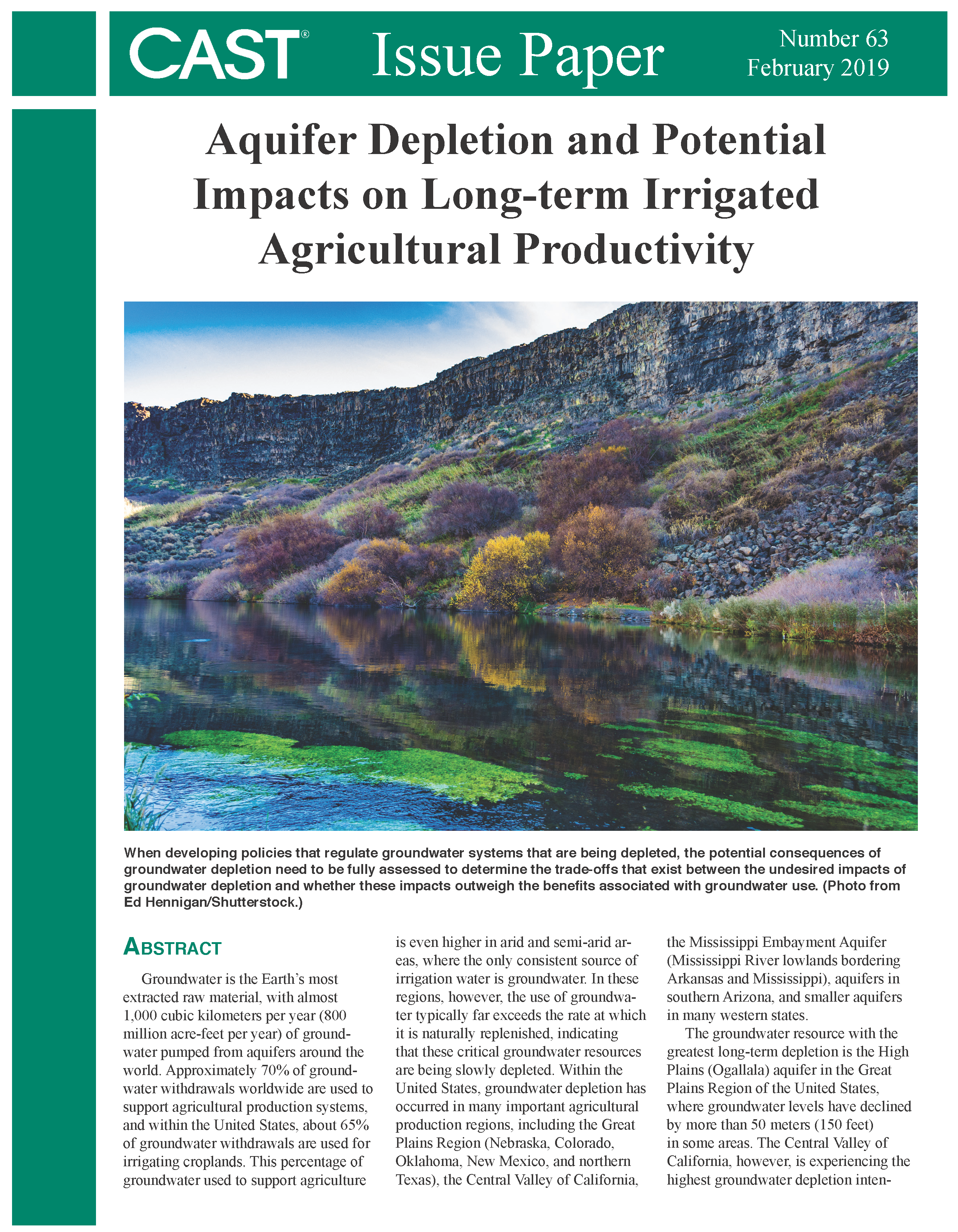
CAST-IP63_Aquifer-Depletion-cover.png
Groundwater is the Earth's most extracted raw material, with roughly 70% of global withdrawals used for agriculture—a share even higher in arid regions where use far exceeds natural replenishment. Significant aquifer depletion has occurred in key U.S. agricultural areas, including the Great Plains, California's Central Valley, the Mississippi Embayment, and aquifers in southern Arizona. This Issue Paper reviews causes and consequences of groundwater depletion with a focus on agricultural impacts, and discusses effective policies and practices for sustainable groundwater development and management.