CAST papers are developed by interdisciplinary task forces composed of volunteer authors, chairs, reviewers, liaisons, and translators from academia, industry, and government. This index recognizes those contributors and highlights the breadth of expertise that supports CAST’s work.

David Songstad

Affiliation
United States Department of Agriculture
Title/Position
National Program Leader
Publications as Reviewer
CAST_IP74-Gene-Edited-Crops-scaled-1.jpg
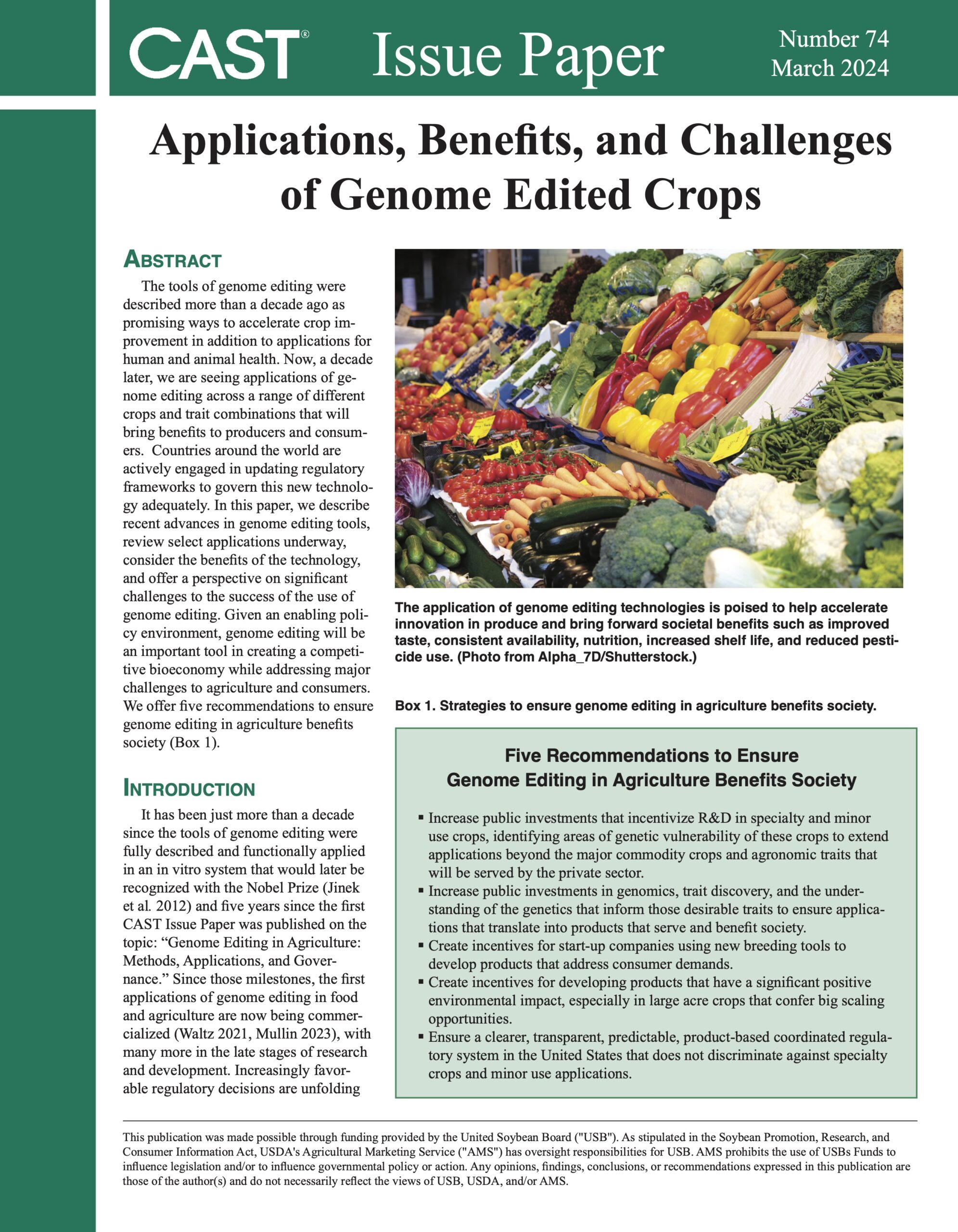
In this paper, we describe recent advances in genome editing tools, review select applications underway, consider the benefits of the technology, and offer a perspective on significant challenges to the successful use of genome editing. Given an enabling policy environment, genome editing will be an important tool for creating a competitive bioeconomy while addressing major challenges in agriculture and for consumers. We offer five recommendations to ensure genome editing in agriculture benefits society.
Publications as CAST Liaison
CAST-IP60_Gene-Editing.png
Genome editing enables precise, targeted changes to the DNA of living cells and organisms. In the face of growing food, fiber, feed, and fuel demands—compounded by land and water constraints and climate change—genome editing for crop and livestock improvement is drawing increasing attention. This paper describes how genome editing is performed, the types of edits possible, its relationship to traditional breeding and genetic engineering, and potential limitations. It also provides an overview of current governance, including regulations, international agreements, and codes of conduct, discussing environmental, animal welfare, and economic considerations to support science-informed regulatory frameworks.
CAST-SP32_Omega-3.jpg
Omega-3 fatty acids are a family of metabolically related polyunsaturated fatty acids with broad health benefits. As chronic diseases tied to diet and lifestyle now dominate mortality statistics, interest in how diet promotes health has grown. This publication examines the biochemistry, health benefits, dietary sources, and recommended intakes of omega-3 fatty acids. Topics include their role in cell membrane structure and function, effects on inflammation and chronic disease—including cardiovascular disease, cancer, and neurological function—food sources, enrichment through modern production techniques, and federal regulations governing labeling and health claims.