CAST papers are developed by interdisciplinary task forces composed of volunteer authors, chairs, reviewers, liaisons, and translators from academia, industry, and government. This index recognizes those contributors and highlights the breadth of expertise that supports CAST’s work.

Jayson Lusk

Affiliation
Purdue University
Publications as Task Force Chair
COVID-Impacts
This paper examines the economic impacts of the COVID-19 pandemic on the agriculture sector. Topics covered include macroeconomics, trade, supply chain, consumer behavior, food service/grocery, meat processing, forestry and wood products, local food systems, food waste, food insecurity, major commodity crops, agricultural finance, agricultural labor, rural health care, and research and outreach priorities.
Publications as Author
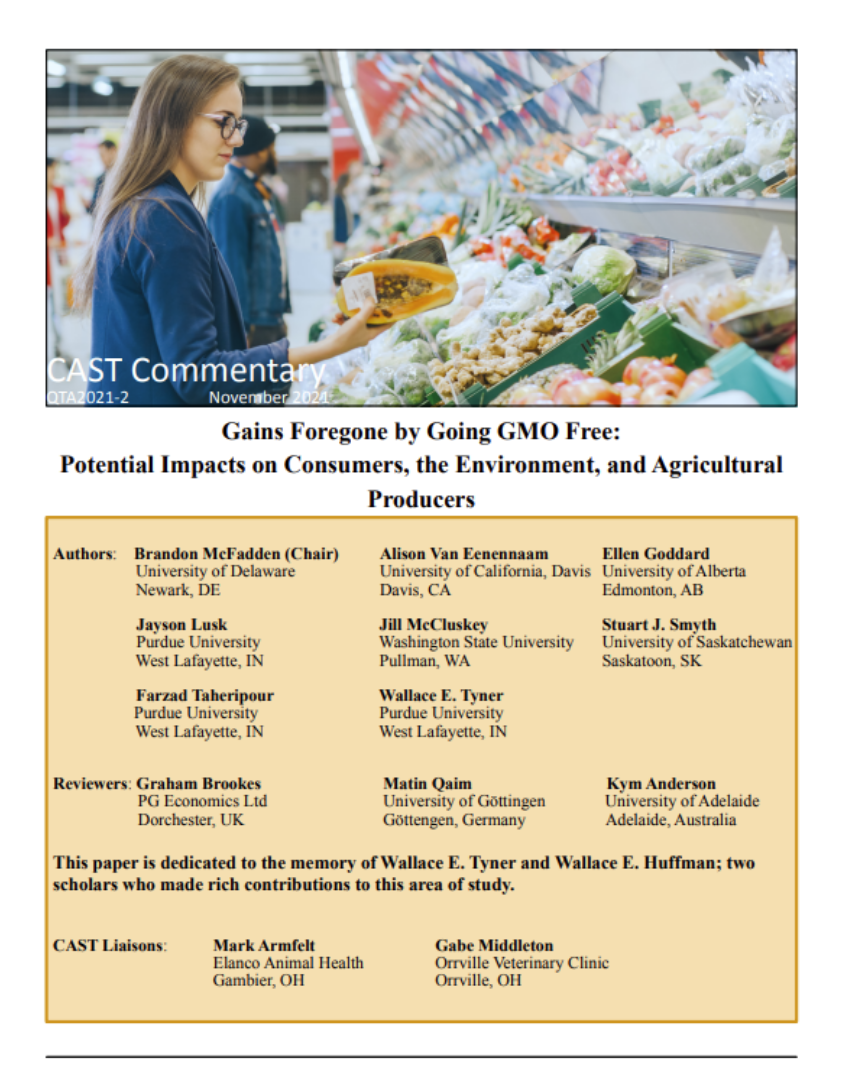
GMO-Free-pub-cover-nov.png
This paper examines the societal, environmental, and economic implications of eliminating genetically modified organisms (GMOs) from agricultural production systems. GMOs have enabled significant advancements in food security, yield stability, pest and disease management, and environmental sustainability over the past three decades.
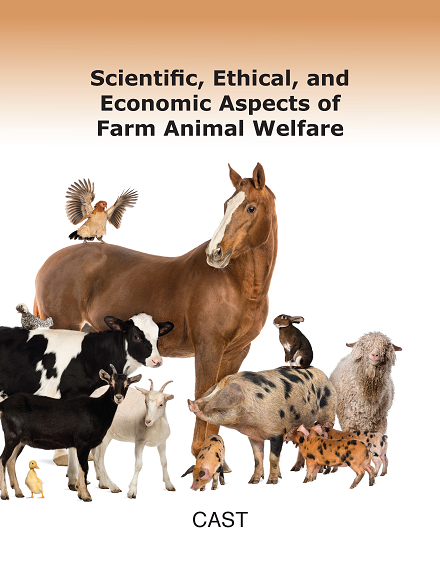
CAST-R143-Animal-Welfare.png
Conflicting values in society about animal use lead to ongoing debate about what constitutes a good life for farm animals. Applied ethicists take two broad approaches: one focuses on the consequences of using animals in particular ways, the other on the morality of that use regardless of consequences—reflected in "animal welfare" and "animal rights" perspectives. This task force report examines current issues in agricultural animal production, the origins of welfare concerns, major scientific advances since the 1997 CAST Task Force Report, and outstanding challenges and priority areas for future research, coordination, and outreach in agricultural animal welfare.
Publications as Reviewer
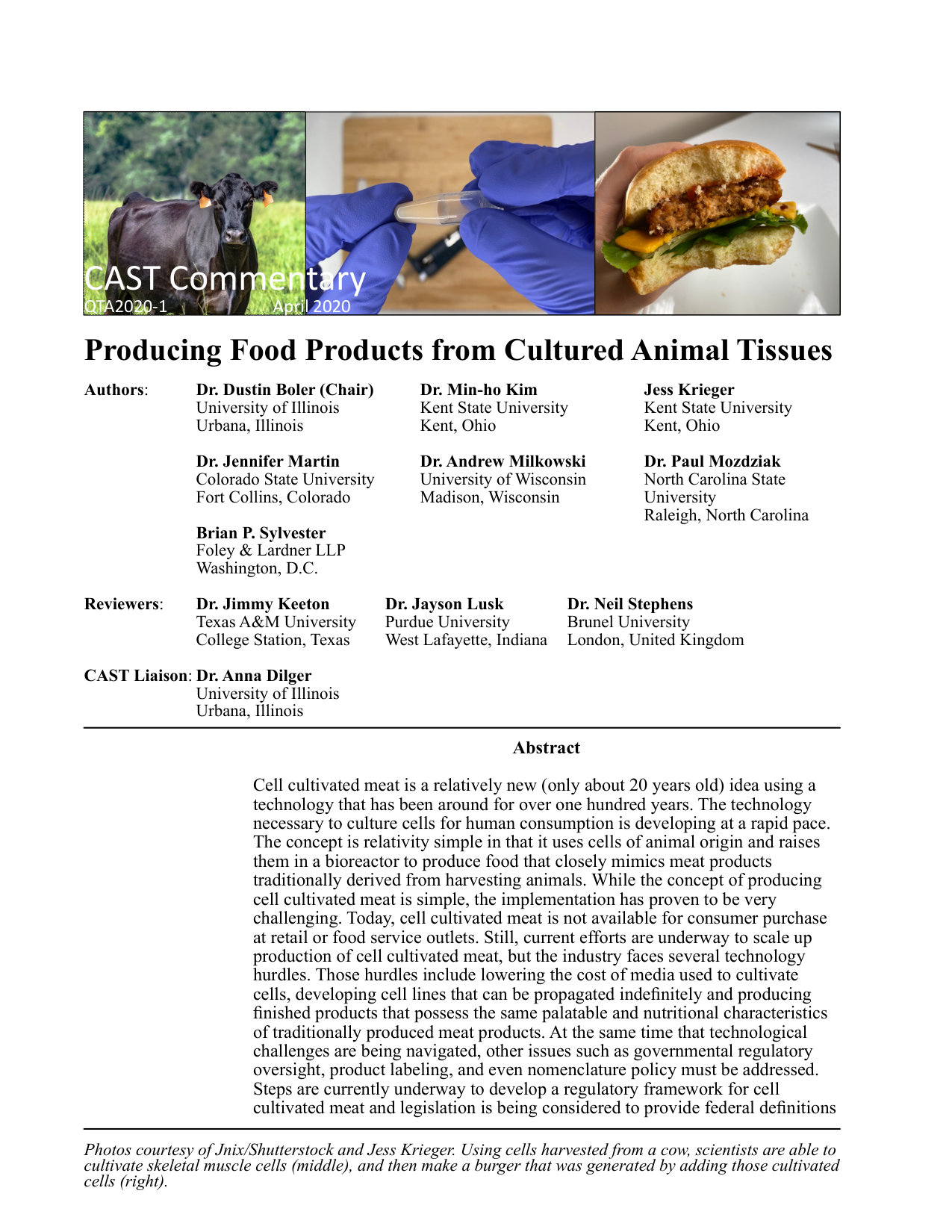
QTA2020-1-Cultured-Tissues-1
This paper examines the current state of cell cultivated meat and the scientific, regulatory, and consumer challenges that must be addressed before these products can achieve widespread adoption. While rapid advances in cell culture technology have accelerated commercialization, questions remain about food safety, regulatory oversight, nutritional composition, sensory characteristics, and product consistency. The paper explores how cultivated meat compares with conventional meat in appearance, texture, flavor, and nutritional value, highlighting the need for rigorous scientific evaluation and adaptable regulatory frameworks.