
CAST papers are developed by interdisciplinary task forces composed of volunteer authors, chairs, reviewers, liaisons, and translators from academia, industry, and government. This index recognizes those contributors and highlights the breadth of expertise that supports CAST’s work.

Luis O. Tedeschi

Affiliation
Texas A&M University
Title/Position
Professor, Animal Nutrition; Texas A&M AgriLife Research Faculty Fellow; Chancellor EDGES Fellow
Expertise
Ruminant nutrition and metabolism; Nutrition systems modeling and system dynamics; Precision livestock nutrition and decision-support systems; Mechanistic and hybrid AI/machine-learning nutrition models; Feed evaluation and fermentation kinetics; Methane mitigation and environmental sustainability; Microbial protein synthesis; Energy and nutrient requirements of grazing and feedlot animals; Precision livestock farming technologies; Climate-smart feed and nutrient management
Bio

Luis O. Tedeschi is a Professor of Animal Science at Texas A&M AgriLife Research and an internationally recognized leader in ruminant nutrition and systems modeling. His work bridges traditional nutrition science with advanced computational approaches, integrating mechanistic models with artificial intelligence and machine learning to improve livestock productivity, nutrient efficiency, and environmental sustainability. Dr. Tedeschi is the developer of widely used nutrition models, including the Ruminant Nutrition System and related large- and small-ruminant systems, and has contributed extensively to national and international modeling efforts. He served as lead modeler for the Nutrient Requirements of Beef Cattle (8th Revised Edition) and currently chairs key committees within the National Animal Nutrition Program, advancing climate-smart and precision nutrition strategies. With more than 300 peer-reviewed publications, Dr. Tedeschi is at the forefront of digital and predictive innovation in animal agriculture.
Publications as Author
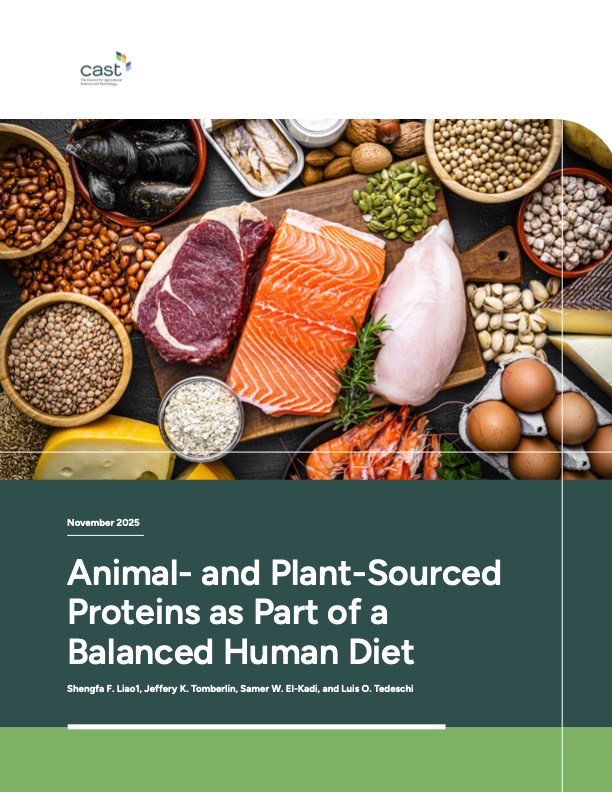
CAST_Protein-in-the-Diet
Protein quality, not just quantity, is critical for meeting human dietary needs. This paper reviews animal‑, plant‑, and emerging protein sources in terms of amino acid composition, digestibility, nutritional adequacy, and environmental impact. It highlights life‑stage–specific protein requirements, limitations of single‑source proteins, and the role of complementary proteins in balanced diets. Global patterns of protein availability, future demand, and sustainability challenges are examined. The paper concludes that diverse dietary protein sources, rather than exclusive reliance on plant or animal proteins, are essential for supporting human health and resilient food systems.
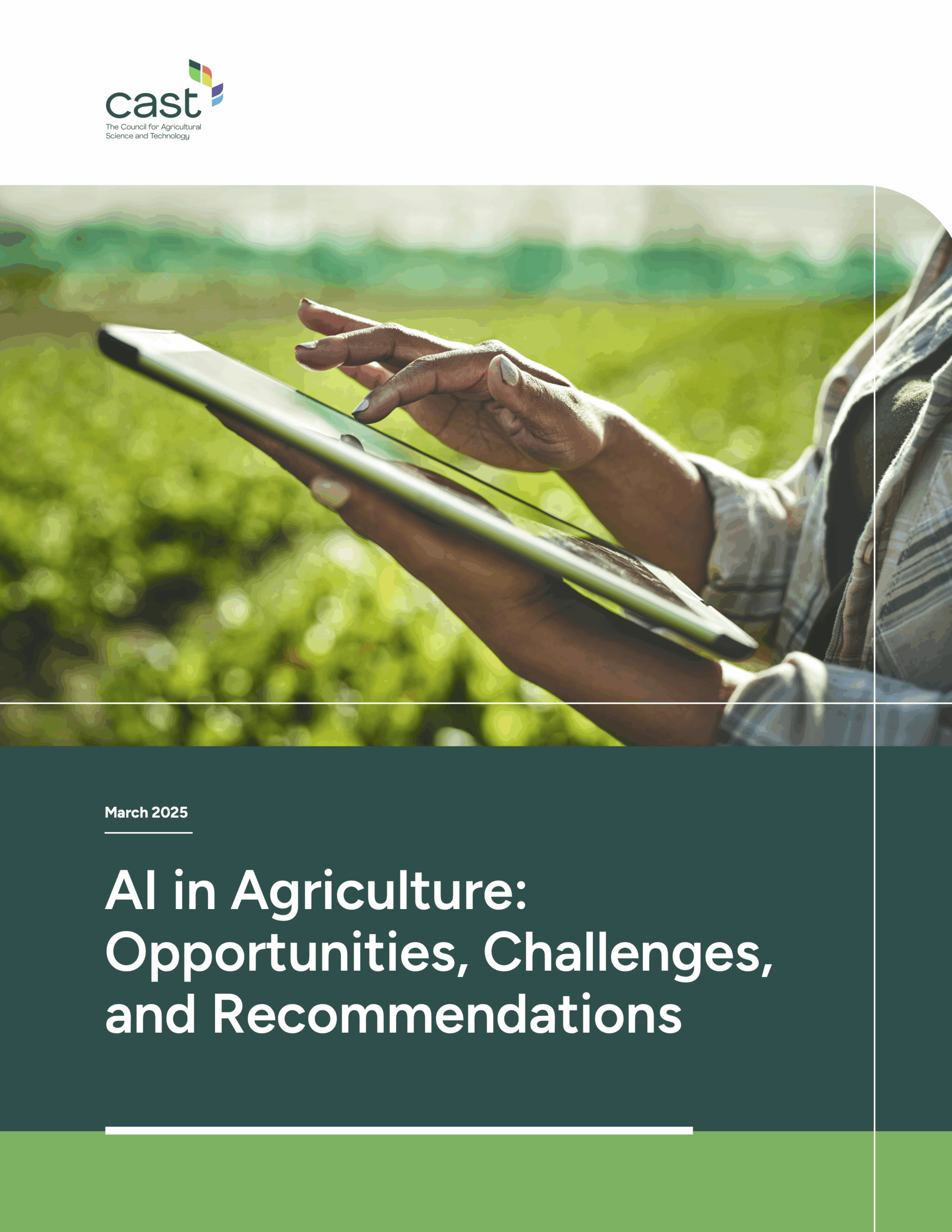
CAST_AI-in-Agriculture
This report examines the current and emerging applications of AI in agriculture, including crop and livestock monitoring, precision management, yield prediction, disease and pest detection, automation, and supply chain optimization. It explores the data sources, algorithms, and digital infrastructure that underpin AI-driven systems, as well as the role of AI in enhancing sustainability, productivity, and resilience under climate and resource constraints.