CAST papers are developed by interdisciplinary task forces composed of volunteer authors, chairs, reviewers, liaisons, and translators from academia, industry, and government. This index recognizes those contributors and highlights the breadth of expertise that supports CAST’s work.

David Zilberman

Affiliation
University of California, Berkeley
Publications as Task Force Chair
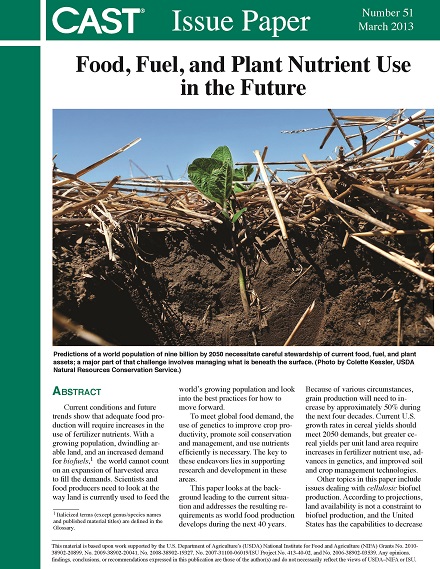
CAST-IP51_Nutrients.jpg
Future food, fiber, and fuel demands cannot be met by expanding cropland; continued advances in nutrient use efficiency will be essential. With a growing population, dwindling arable land, and rising biofuel demand, the world must rely on genetic improvements in crop productivity, soil conservation, and nutrient efficiency rather than expansion of harvested area. This CAST Issue Paper examines the background to current conditions and addresses requirements for world food production over the next 40 years, demonstrating why research in nutrient use, recovery, and recycling is crucial.
Publications as Author
COVID-Impacts
This paper examines the economic impacts of the COVID-19 pandemic on the agriculture sector. Topics covered include macroeconomics, trade, supply chain, consumer behavior, food service/grocery, meat processing, forestry and wood products, local food systems, food waste, food insecurity, major commodity crops, agricultural finance, agricultural labor, rural health care, and research and outreach priorities.
CAST-IP37_Gene-Flow.jpg
This Issue Paper identifies the nature of gene flow and discusses the relatively limited situations in which it is likely to cause economic problems in the production of commercial biotech crops. The paper explains how gene flow relates to adventitious presence, describes the biological traits being imparted into biotech crops, summarizes present risk assessment and regulatory mechanisms, and discusses potential economic effects and policy and research ramifications of gene flow of commercial biotech crops.
CAST R141 Climate Change
Greenhouse gases (GHGs) are of increasing concern because of their potential role in promoting rapid and undesirable change in climate. Agriculture ironically serves as both a source and a sink for this increase in GHGs. This report analyzes agriculture's complex, pivotal role in this vitally important issue by considering policy options, implementation, and future monitoring and verification of GHG mitigation. The report outlines seven potential methods for agricultural mitigation of GHG concentrations.