CAST papers are developed by interdisciplinary task forces composed of volunteer authors, chairs, reviewers, liaisons, and translators from academia, industry, and government. This index recognizes those contributors and highlights the breadth of expertise that supports CAST’s work.

John Havlin

Affiliation
North Carolina State University
Publications as Author
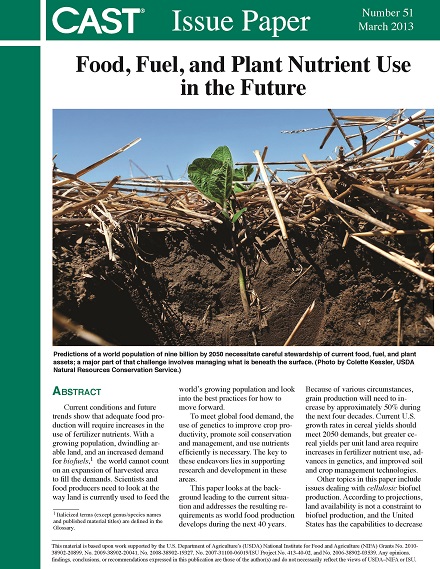
CAST-IP51_Nutrients.jpg
Future food, fiber, and fuel demands cannot be met by expanding cropland; continued advances in nutrient use efficiency will be essential. With a growing population, dwindling arable land, and rising biofuel demand, the world must rely on genetic improvements in crop productivity, soil conservation, and nutrient efficiency rather than expansion of harvested area. This CAST Issue Paper examines the background to current conditions and addresses requirements for world food production over the next 40 years, demonstrating why research in nutrient use, recovery, and recycling is crucial.
Publications as CAST Liaison
alfalfa-gene-flow-paper-in-spanish-cover.jpg
Esta publicación aborda el flujo de genes en la alfalfa (Medicago sativa L.) y sus implicaciones para la coexistencia entre sistemas de producción genéticamente modificados (GE), convencionales y orgánicos. Explica los factores biológicos y agronómicos que influyen en el movimiento génico a través del polen y la semilla, y describe estrategias de mitigación para minimizar la presencia adventicia (AP) de rasgos GE en mercados sensibles.
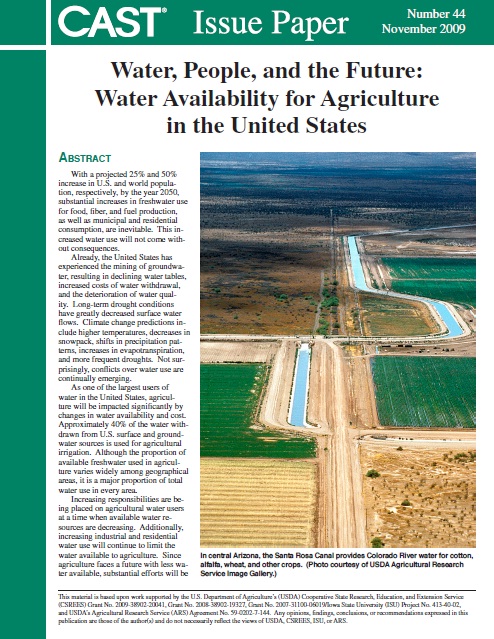
CAST IP44_Water and People
Despite current uncertainty about the United States' economic future, most reports suggest that growth will resume and competition for freshwater will continue. As one of the largest users of water in the United States, agriculture will be impacted significantly by changes in water availability and cost. How water managers and users respond to water use challenges will determine, in part, the long-term availability of water for municipal, agricultural, and other uses. The authors provide insight into how water challenges are being addressed in four specific areas of the United States as helpful case studies in developing solutions to similar water issues in other regions.
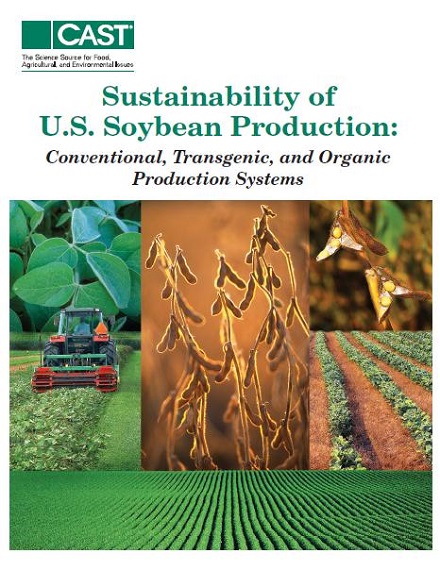
CAST-SP30_US-Soybean-Production.jpg
This CAST Special Publication documents the ecological and economic implications of the various systems used in U.S. soybean production. Soybean production has changed in the United States since its first introduction in the mid-1880s. Initially, the crop was produced mainly for forage and received only minimal inputs. Today, soybeans have become a major source of protein in animal diets and vegetable oils for human consumption. Considering this dramatic change, CAST is providing a comprehensive literature review that evaluates U.S. soybean production systems currently in use with respect to their environmental and economic sustainability.
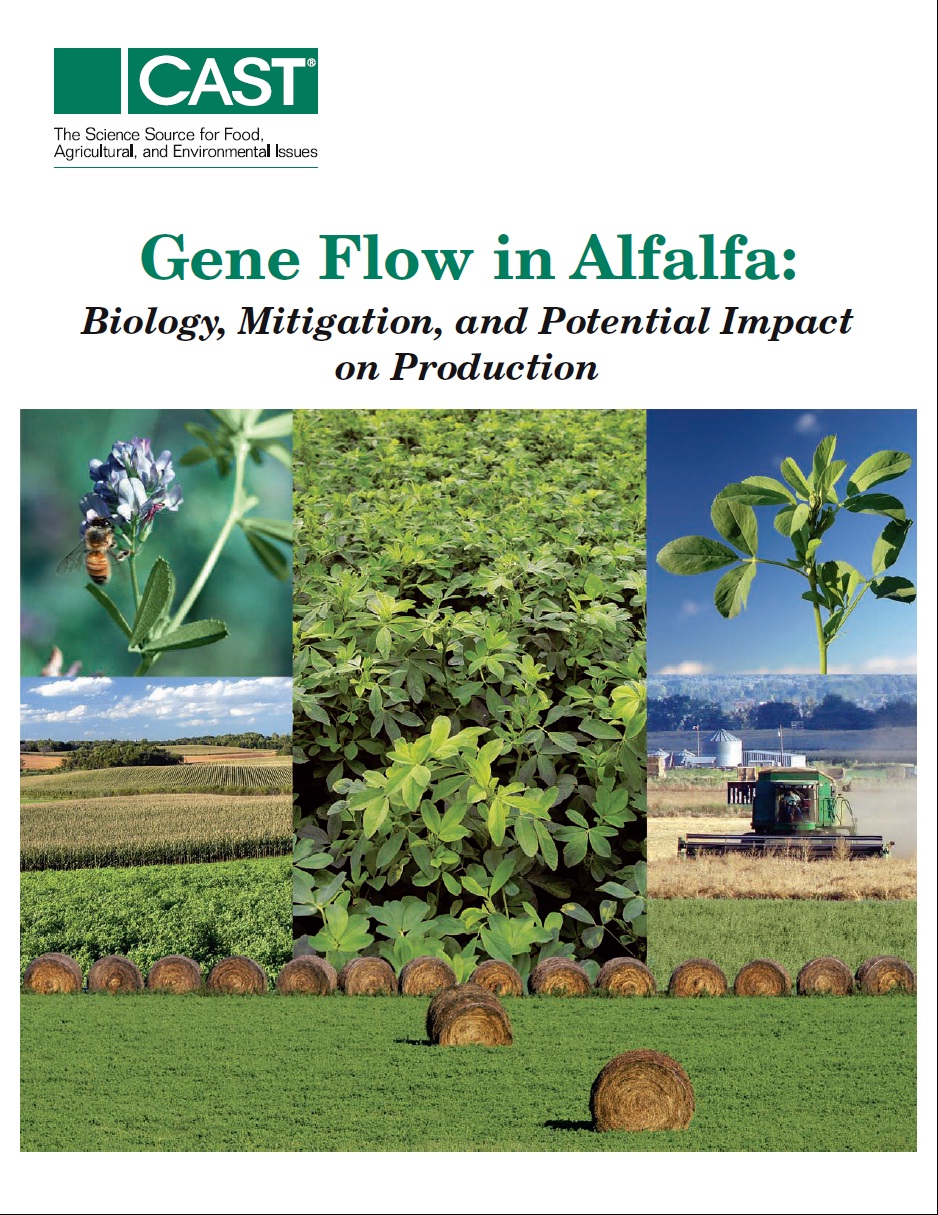
CAST-SP28_Gene-Flow-Alfalfa.jpg
This Special Publication describes the biology and agronomic practices in alfalfa that should be considered in developing coexistence strategies to allow growers to have choices, specifically between genetically engineered (GE), conventional, and GE-sensitive markets in the United States. These strategies are based on science and are a direct extension of well-established coexistence principles routinely used by seed growers. The management practices currently being used by growers of Roundup Ready alfalfa seed are presented as an example of strategies developed by the alfalfa seed industry that allow coexistence of different production systems.