CAST papers are developed by interdisciplinary task forces composed of volunteer authors, chairs, reviewers, liaisons, and translators from academia, industry, and government. This index recognizes those contributors and highlights the breadth of expertise that supports CAST’s work.

Richard Reynnells

Publications as Author
submission_127_123_coverImage_en
CAST sponsored a three-day symposium in Washington, D.C. in June 2010, in cooperation with USDA, on Sustaining Animal Agriculture. Thirty-two presenters addressed bioethical and animal welfare issues, certification and regulatory programs, the ethical use of food animals, long-term food security, societal and global impacts, and the consequences of decisions by consumers and government decision makers. Approximately 250 attendees from a wide variety of organizations participated in Q&A sessions throughout the meeting.
Publications as Reviewer
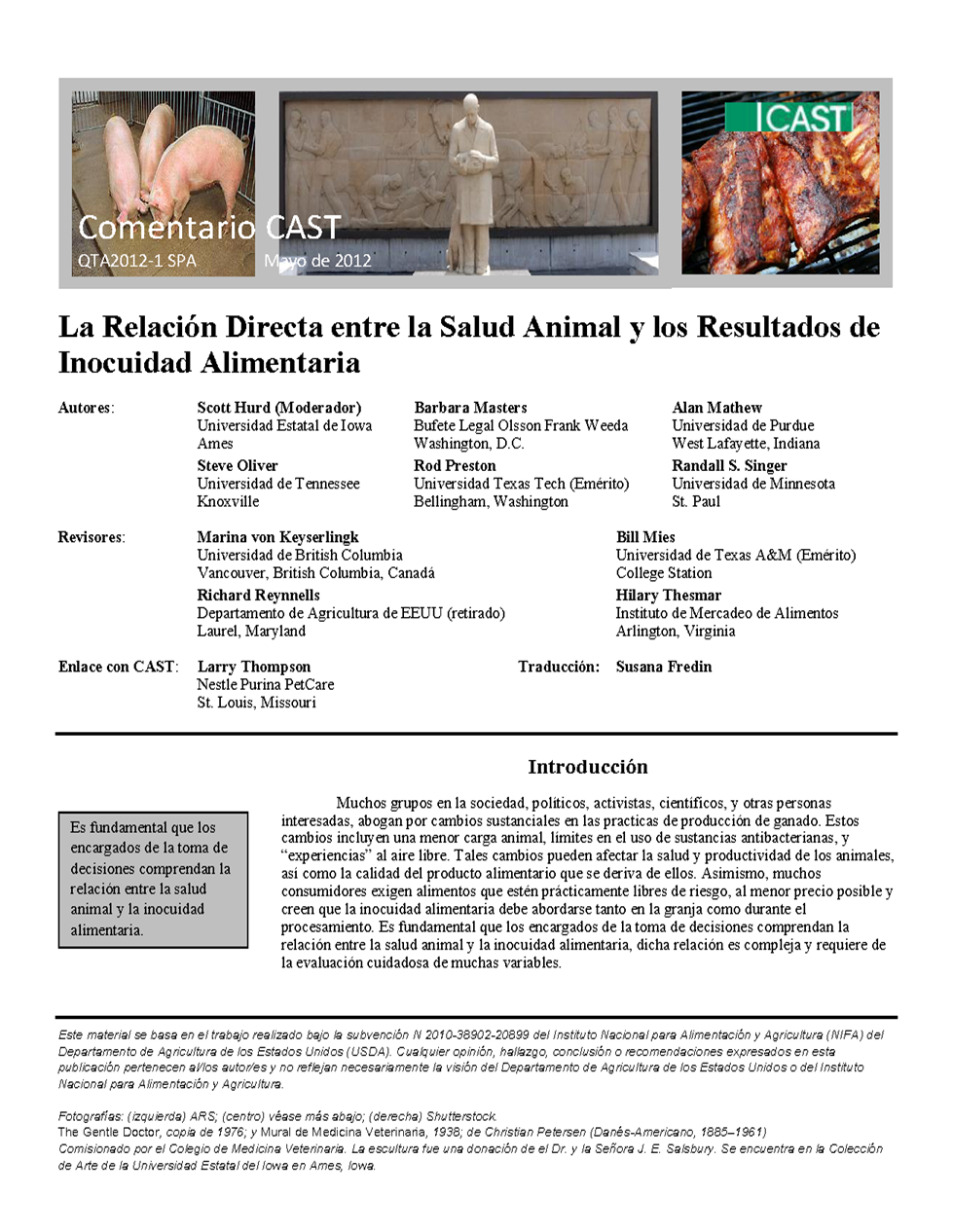
QTA2012-1-Animal-Health-Food-Safety-Spanish.png
La salud animal dentro del sistema de producción de alimentos repercute en aspectos del sistema que van más allá de los propios animales. Para promover alta productividad, los investigadores deben examinar la nutrición, los sistemas de gestión y las prácticas de cuidado animal, incluyendo el uso de antibióticos y vacunas. Este comentario analiza las presiones para cambiar los métodos de cría del ganado, evidencia del impacto directo a la salud pública, y las regulaciones del servicio de inocuidad e inspección. Los autores concluyen que los animales sanos tienen como resultado alimentos más seguros.
QTA2012-1-Animal-Health-Food-Safety.png
The health of the animals within the food animal production system impacts many aspects of the system far removed from the animals themselves. To promote high productivity in animal agriculture, researchers need to examine nutrition, management systems, and animal care practices including the use of antibiotics and vaccines. This Commentary looks at the pressures to change livestock rearing methods, evidence to support the direct public health impact on human illness days, and good safety and inspection service regulations. The authors use indirect evidence, diagrams, and graphs to deliver their findings about the ways that healthy animals result in safer food.