CAST papers are developed by interdisciplinary task forces composed of volunteer authors, chairs, reviewers, liaisons, and translators from academia, industry, and government. This index recognizes those contributors and highlights the breadth of expertise that supports CAST’s work.

Zhengxia Dou

Affiliation
University of Pennsylvania
Publications as Task Force Chair
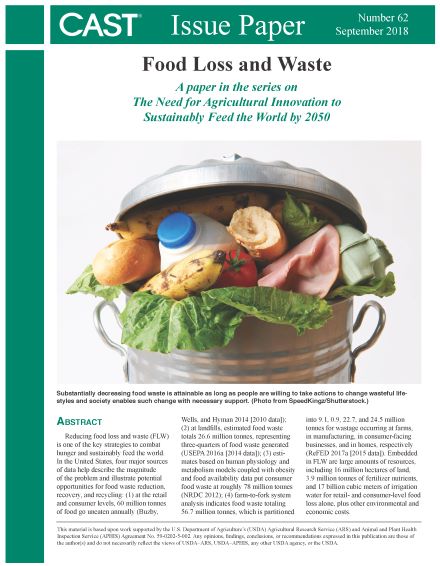
CAST-IP62-Food-Loss-Waste-cover2.jpg
Reducing food loss and waste (FLW) is a key strategy for combating hunger and sustainably feeding a growing world. In the U.S., an estimated 56–78 million tonnes of food are wasted annually across the farm-to-fork system, embedding large amounts of land, fertilizer, and water. Contributing factors vary by food system stage, involving market forces, social norms, and human behavior. Current efforts recover or recycle roughly 19 million tonnes annually, mostly at the manufacturing stage. Critical needs include quantitative assessment of composting programs, technologies converting food waste to safe animal feed, and behavior-change interventions targeting consumers.
food_waste_cover_B58FFC5F61703
This is a compilation and enrichment of papers presented at The Last Food Mile Conference held at the University of Pennsylvania in December 2014. Topics include food waste in the industry sector and how it is handled, characteristics of food waste in restaurants and in homes, how food waste can be measured, what interventions are most effective, food recovery from the supply chain and how it is diverted and used, and how food marketing affects consumption and waste.
Publications as Author
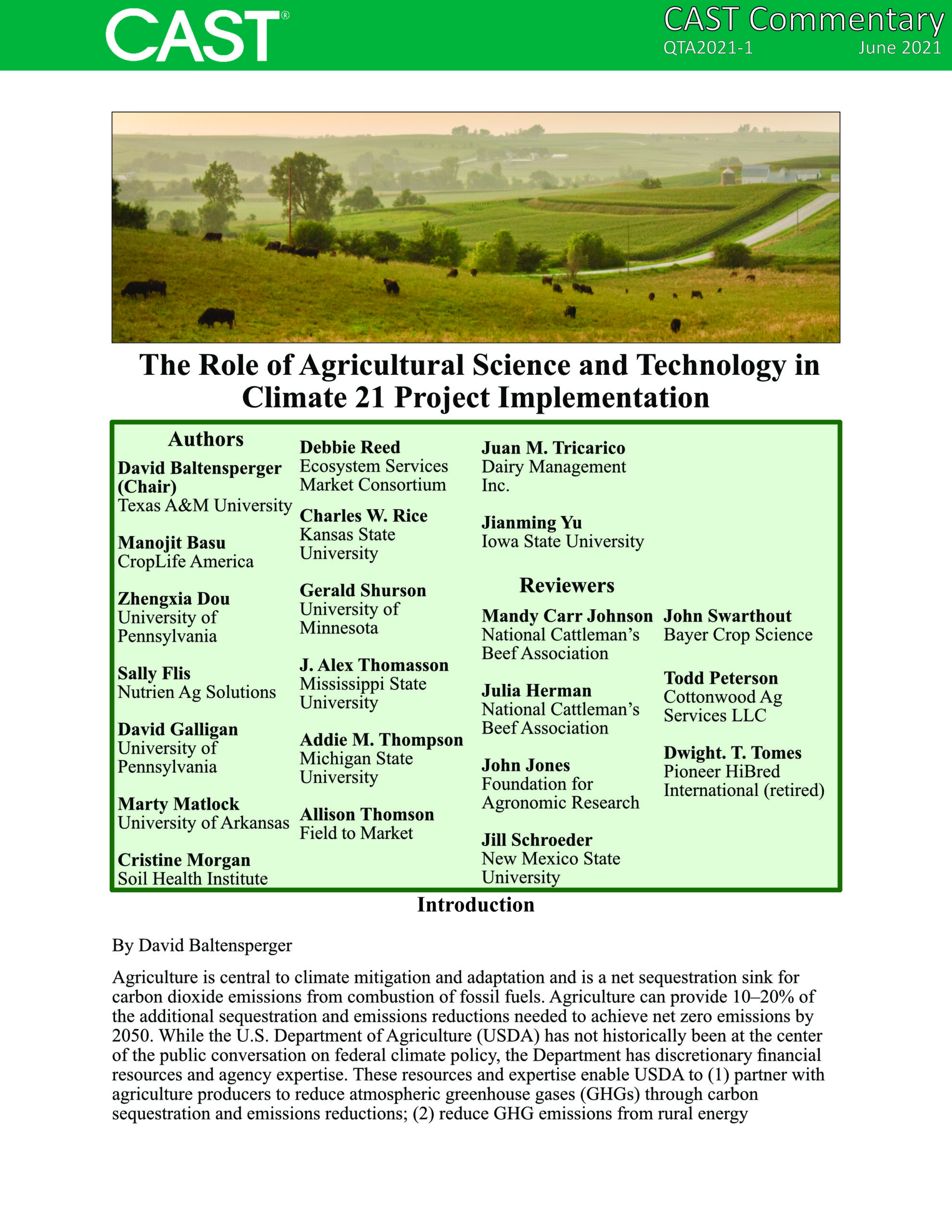
COVID-Impacts
This commentary evaluates how agricultural science and technology can support implementation of the federal Climate 21 Project, which positions the U.S. Department of Agriculture as a central actor in national climate mitigation and resilience strategies. Agriculture and forestry are highlighted as the only major sectors capable of becoming net greenhouse gas sinks, offering substantial potential to help the United States reach net‑zero emissions by 2050 through soil carbon sequestration, improved nutrient management, reduced tillage, and strengthened crop and livestock systems.