CAST papers are developed by interdisciplinary task forces composed of volunteer authors, chairs, reviewers, liaisons, and translators from academia, industry, and government. This index recognizes those contributors and highlights the breadth of expertise that supports CAST’s work.

Kassim Al-Khatib

Affiliation
University of California–Davis
Publications as Author
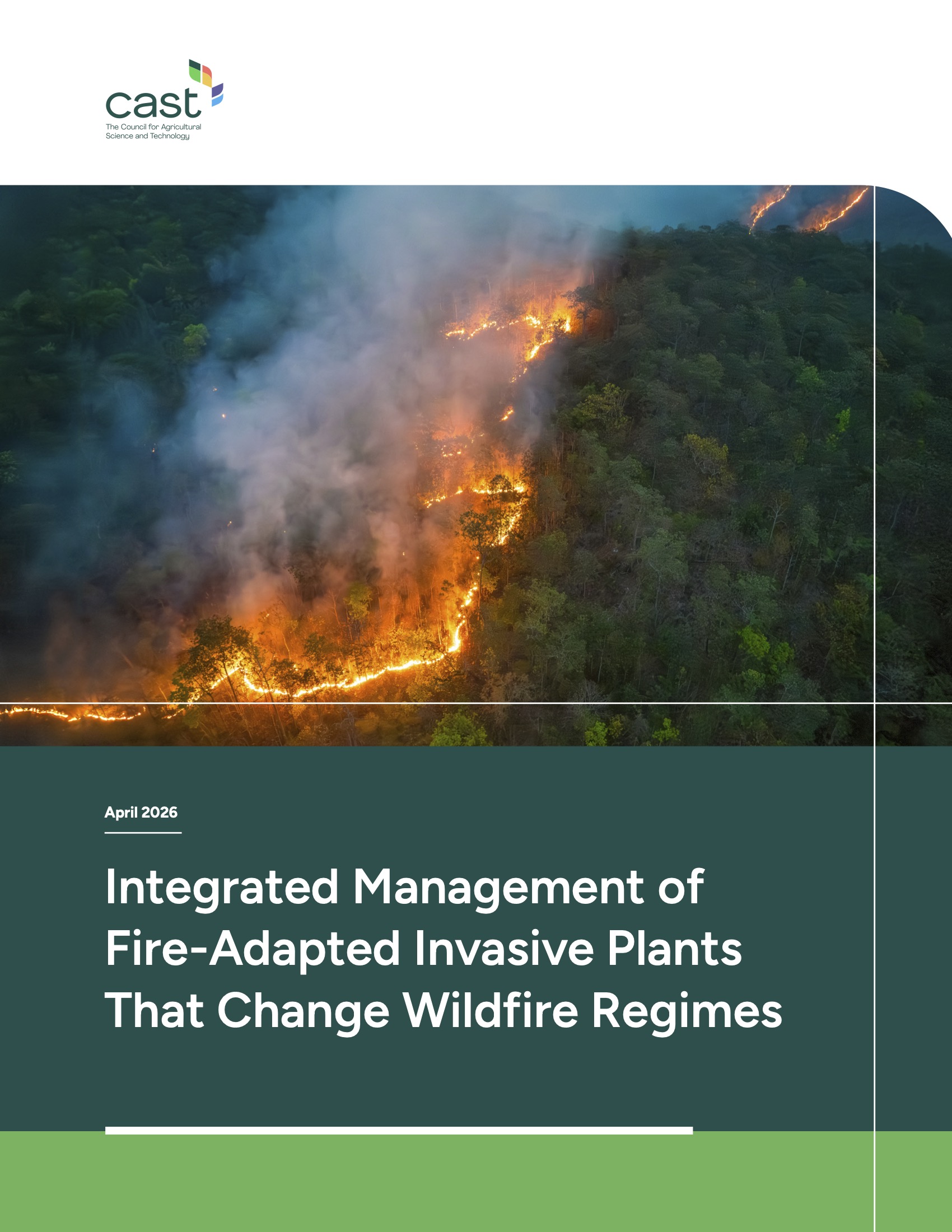
CAST_Integrated Management of Fire-Adapted Invasive Plants That Change Wildfire Regimes_EM
Fire-adapted invasive plants alter wildfire regimes — some by increasing fire frequency and intensity, others by suppressing it. Both dynamics degrade native ecosystems and demand science-based management. This publication examines the ecology, policy landscape, and integrated management options for invasive plants that change wildfire regimes, with case studies from California, the Southeastern United States, and the Sagebrush Steppe. Effective management requires coordinated action, adaptive strategies, and restoration practices tailored to local conditions and land management goals.

Publications as Reviewer
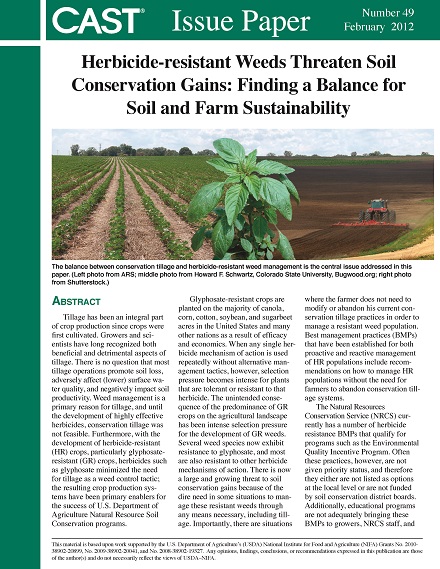
CAST-IP49_Tillage.jpg
Herbicides were developed during the twentieth century to be used with conventional tillage for weed control. Conservation (or minimum) tillage subsequently evolved, which enabled less soil damage when used with herbicides. Selection pressure, however, has resulted in weed species that have made adaptations for survival in conjunction with tillage. The U.S. government has put several federal policies and programs in place that help determine the selection and implementation of crops and conservation programs in relation to herbicides and tillage. This Issue Paper (IP 49) examines the impact of certain weed management practices on soil conservation objectives and addresses ways to mitigate negative effects.
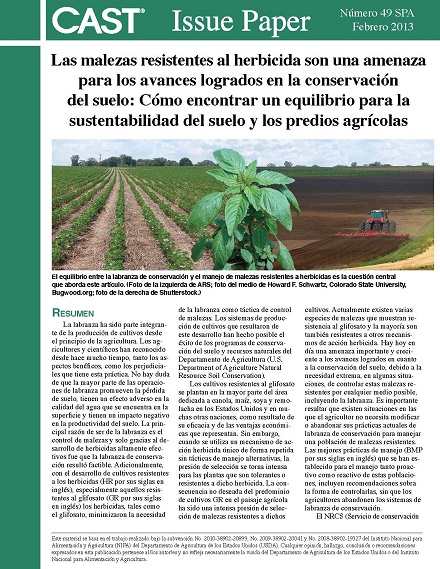
CAST-IP49-SPA.jpg
Los herbicidas se desarrollaron para usarse con la labranza convencional en el control de malezas, y posteriormente la labranza de conservación permitió menor daño al suelo cuando se utilizaba con herbicidas. Sin embargo, las presiones de selección han producido especies de malezas adaptadas para sobrevivir junto con la labranza. El gobierno de EEUU ha establecido programas y políticas para orientar la selección e implementación de estrategias de control de malezas y conservación. Este artículo examina el impacto de ciertas prácticas de control de malezas en los objetivos de conservación del suelo y aborda formas de mitigar sus efectos negativos.
Publications as CAST Liaison
CAST-IP37_Gene-Flow.jpg
This Issue Paper identifies the nature of gene flow and discusses the relatively limited situations in which it is likely to cause economic problems in the production of commercial biotech crops. The paper explains how gene flow relates to adventitious presence, describes the biological traits being imparted into biotech crops, summarizes present risk assessment and regulatory mechanisms, and discusses potential economic effects and policy and research ramifications of gene flow of commercial biotech crops.
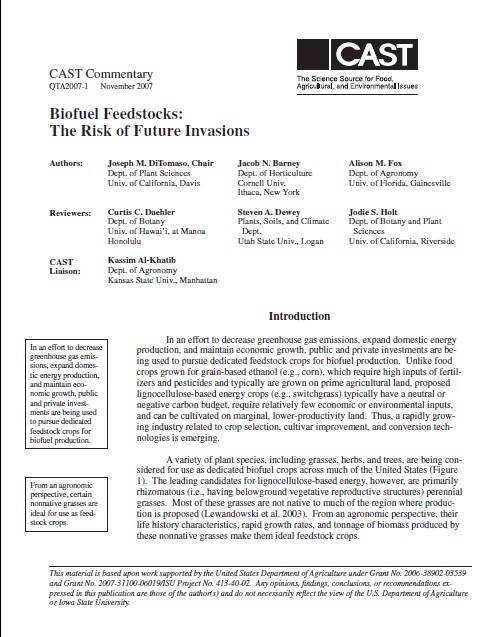
QTA2007-1-Biofuels.jpg
In an effort to reduce greenhouse gas emissions, expand domestic energy production, and maintain economic growth, public and private investments are being used to pursue dedicated feedstock crops for biofuel production. This commentary addresses the necessary balance between designing biofuel feedstock crops to require minimal inputs yet preventing them from surviving outside the cultivated environment.