CAST papers are the foundation of CAST’s science communication work. Developed by expert-led task forces, these peer-reviewed publications translate agricultural science into trusted insights that inform policy, guide public understanding, and fuel CAST programs, dialogues, and educational initiatives.
Search Publications
Select Year
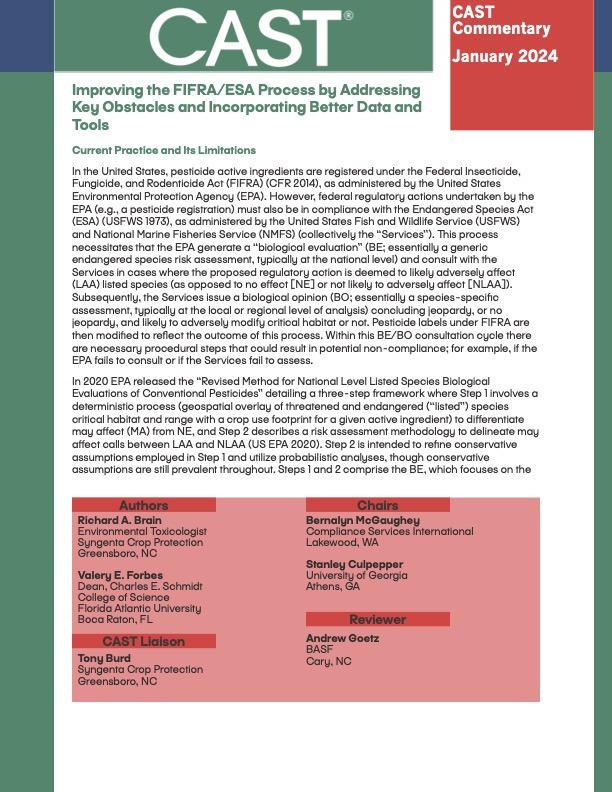
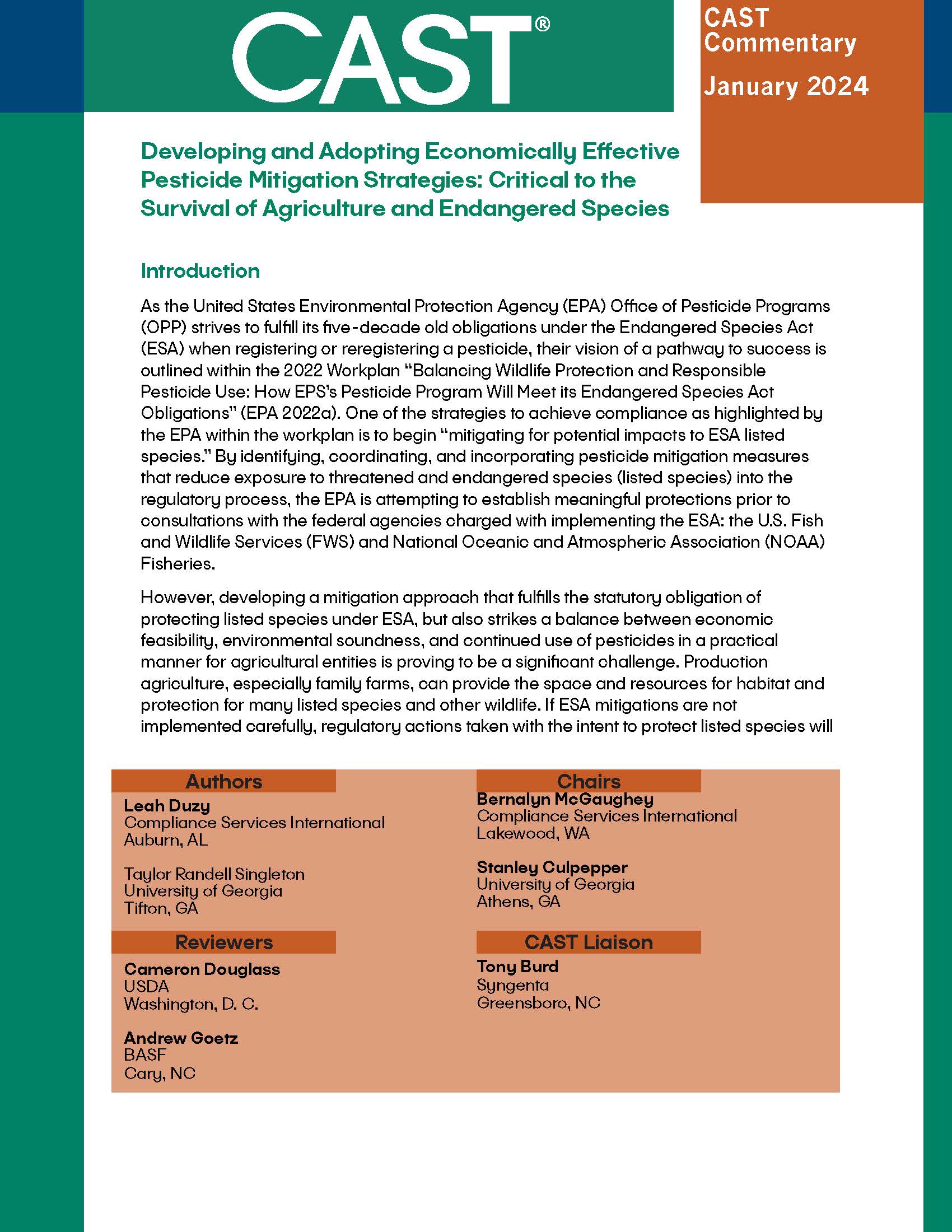
FIFRA_ESA_Essay-4_Page_1.jpg
This paper examines the challenges and opportunities associated with integrating pesticide mitigation strategies into regulatory frameworks under the Endangered Species Act (ESA) while maintaining agricultural productivity.
Task Force Chairs
Compliance Services International
University of Georgia
Authors
Compliance Services International
University of Georgia
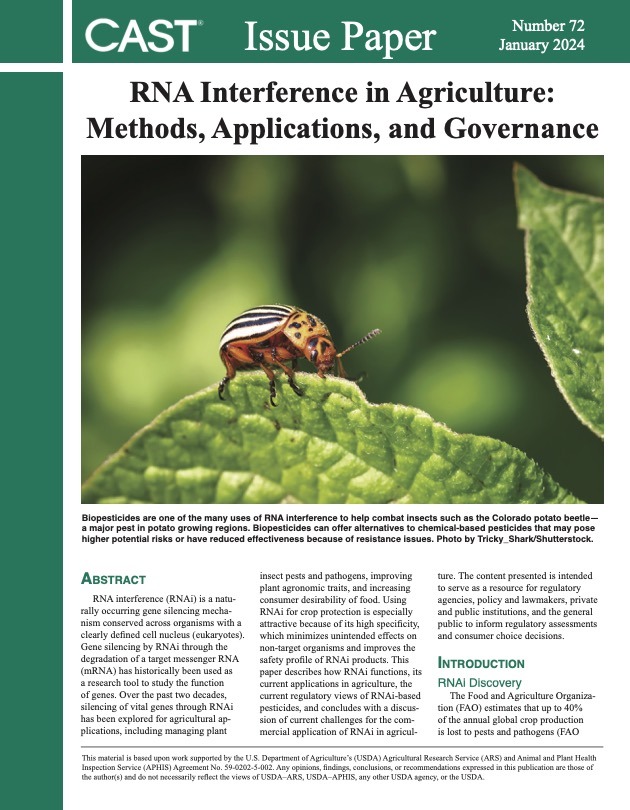
CAST_IP72_RNAi.jpg
https://doi.org/10.62300/IRNE9191
This paper explains RNAi mechanisms, current agricultural applications, regulatory perspectives on RNAi-based pesticides, and challenges for commercialization. It aims to inform regulatory agencies, policymakers, industry stakeholders, and the public for better decision-making regarding RNAi technologies in agriculture.
Task Force Chairs
University of Nebraska- Lincoln
GreenLight Biosciences, Inc
Authors
University of Nebraska-Lincoln
University of Tennessee
Justus-Liebig-Universität Gießen
Texas A&M University
Ghent University
University of Manitoba
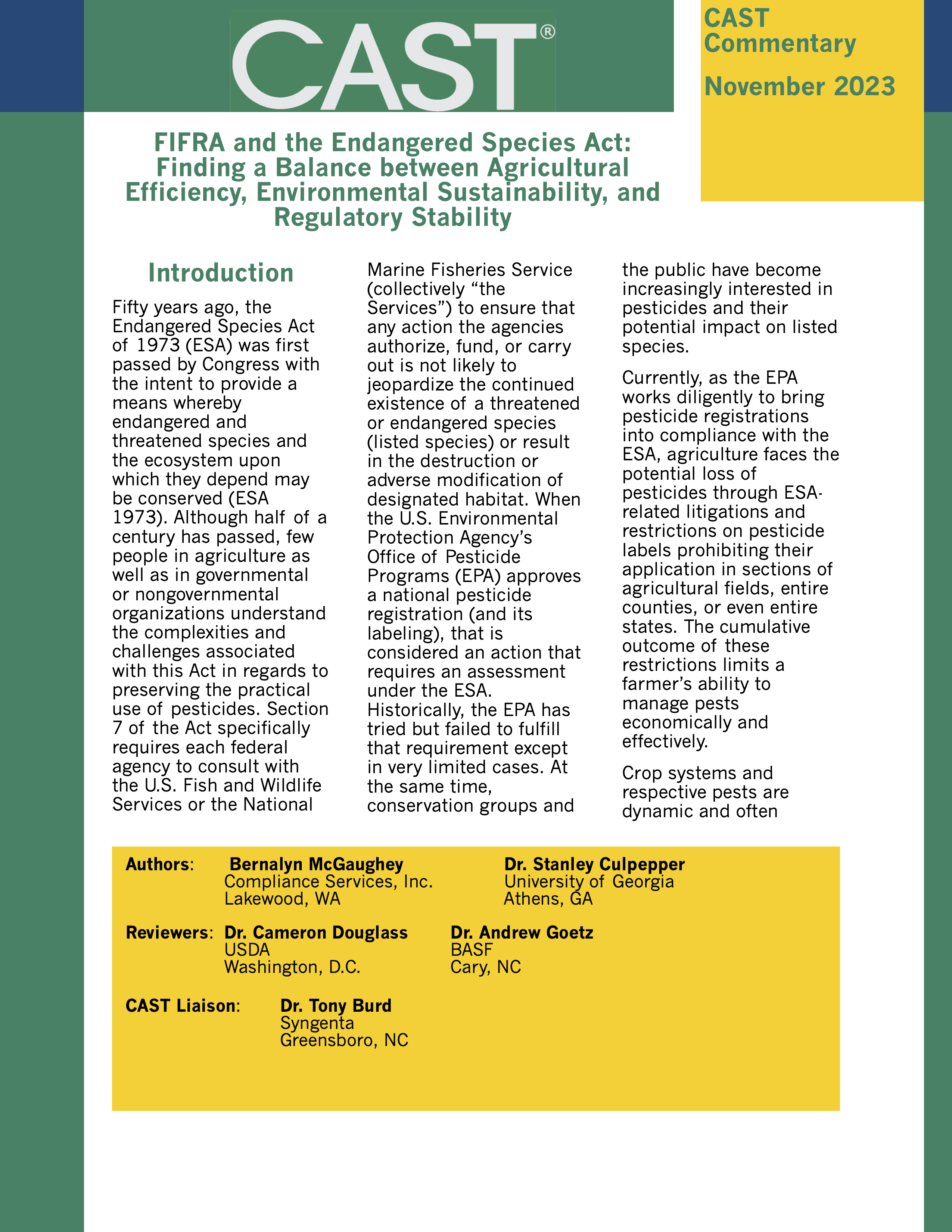
FIFRA_ESA_Essay-3.jpg
This commentary examines the challenges and limitations of the current consultation process between the Federal Insecticide, Fungicide, and Rodenticide Act (FIFRA) and the Endangered Species Act (ESA) in the United States. The process, which requires the Environmental Protection Agency (EPA) to register pesticides to comply with ESA mandates, has become increasingly complex due to overlapping species ranges, conservative risk-assessment methodologies, and resource constraints.
Task Force Chairs
Compliance Services International
University of Georgia
Authors
Syngenta Crop Protection
Florida Atlantic University
FIFRA_ESA_Essay-2.png
https://doi.org/10.62300/w946yk97
This paper examines the intersection of the Endangered Species Act (ESA) and the Federal Insecticide, Fungicide, and Rodenticide Act (FIFRA) as administered by the U.S. Environmental Protection Agency (EPA). It provides an overview of the statutory obligations under both laws, reviews EPA’s historical efforts to comply with ESA requirements during pesticide regulation, and analyzes recent policy developments aimed at improving compliance.
Task Force Chairs
Compliance Services, Inc.
University of Georgia
Authors
National Agriculture Law Center
FIFRA_ESA.png
This paper explores the complex intersection between the Federal Insecticide, Fungicide, and Rodenticide Act (FIFRA) and the Endangered Species Act (ESA), focusing on the challenges of harmonizing pesticide regulation with species protection mandates.
Task Force Chairs
Authors
Compliance Services, Inc.
University of Georgia
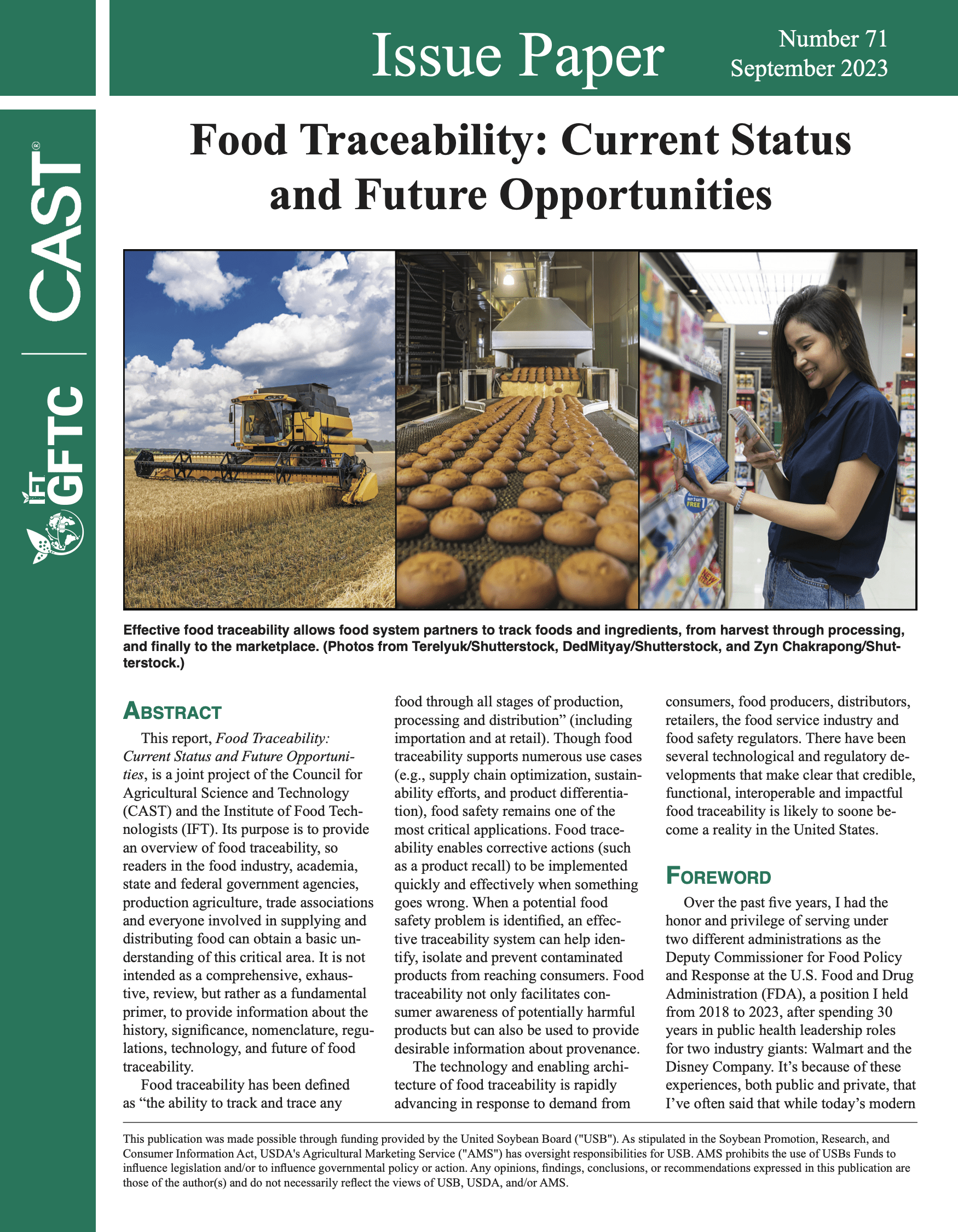
CAST_IP71_Traceability_cover.png
https://doi.org/10.62300/m0t6a757
This paper reviews the current status of food traceability, including its historical development, regulatory frameworks, data standards, and enabling technologies, and explains key concepts such as Critical Tracking Events (CTEs) and Key Data Elements (KDEs).
Task Force Chairs
Cornell University
Authors
Institute of Food Technologists
New Era Partners
Food Safety Strategy
Trustwell
Center for Food Safety and Regulatory Solutions (CFSRS)
Food Policy and Response
Maria Velissariou Consulting, LLC
Institute of Food Technologists
Wiley Rein LLP
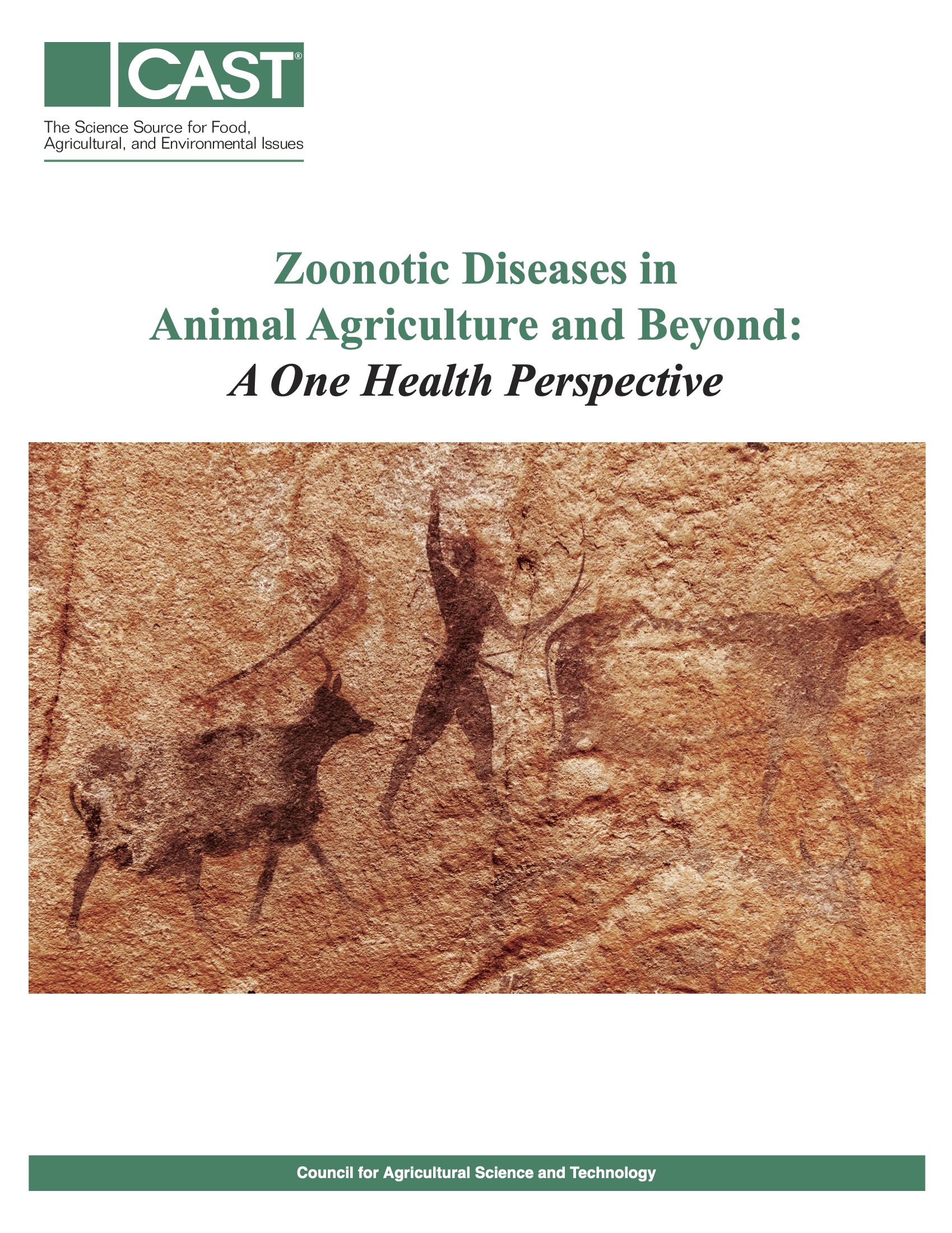
CAST-SP33_Zoonoses
Through selected examples—including foodborne, waterborne, vector-borne, and influenza-related diseases—this publication highlights the complex drivers of zoonotic emergence and the limitations of siloed responses. It emphasizes the need for a One Health approach that integrates human, animal, and environmental health through strengthened surveillance, cross-sector collaboration, infrastructure investment, and prevention-focused strategies.
Task Force Chairs
Ohio State University
Authors
U.S. Department of Agriculture
Centers for Disease Control and Prevention
Ohio State University
George Washington University
USDA-APHIS Office of Science
University of Georgia
The Ohio State University
One Health Initiative
Centers for Disease Control and Prevention
Michigan State University
Centers for Disease Control and Prevention
Oklahoma State University
U.S. Department of Agriculture
Potential-Impact-of-Genome-Editing-on-Climate-Adaptation-and-Mitigation
In this report from SoAR, Dr. Dan Voytas of the University of Minnesota explains the potential to use gene editing tools to accelerate agricultural climate adaptation and mitigation. Launched at COP27 in Sharm el-Sheikh, Egypt, this report outlines a promising research and development pipeline to deliver the tools farms need to thrive in a changing climate.
Task Force Chairs
Authors
University of Minnesota
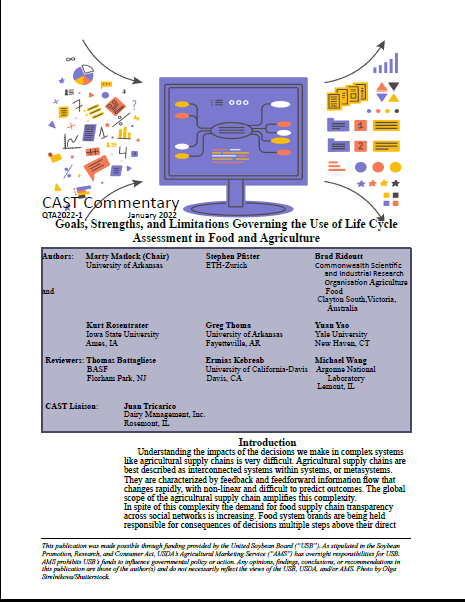
LCA-Cover.png
This paper examines the goals, strengths, and limitations of using Life Cycle Assessment (LCA) within food and agricultural systems. It outlines how LCA provides a systematic, science‑based approach for quantifying environmental impacts across complex agricultural supply chains, enabling improved decision-making, transparency, and sustainability performance.
Task Force Chairs
University of Arkansas
Authors
Iowa State University
ETH-Zurich
University of Arkansas
Commonwealth Scientific and Industrial Research Organisation Agriculture and Food
Yale University
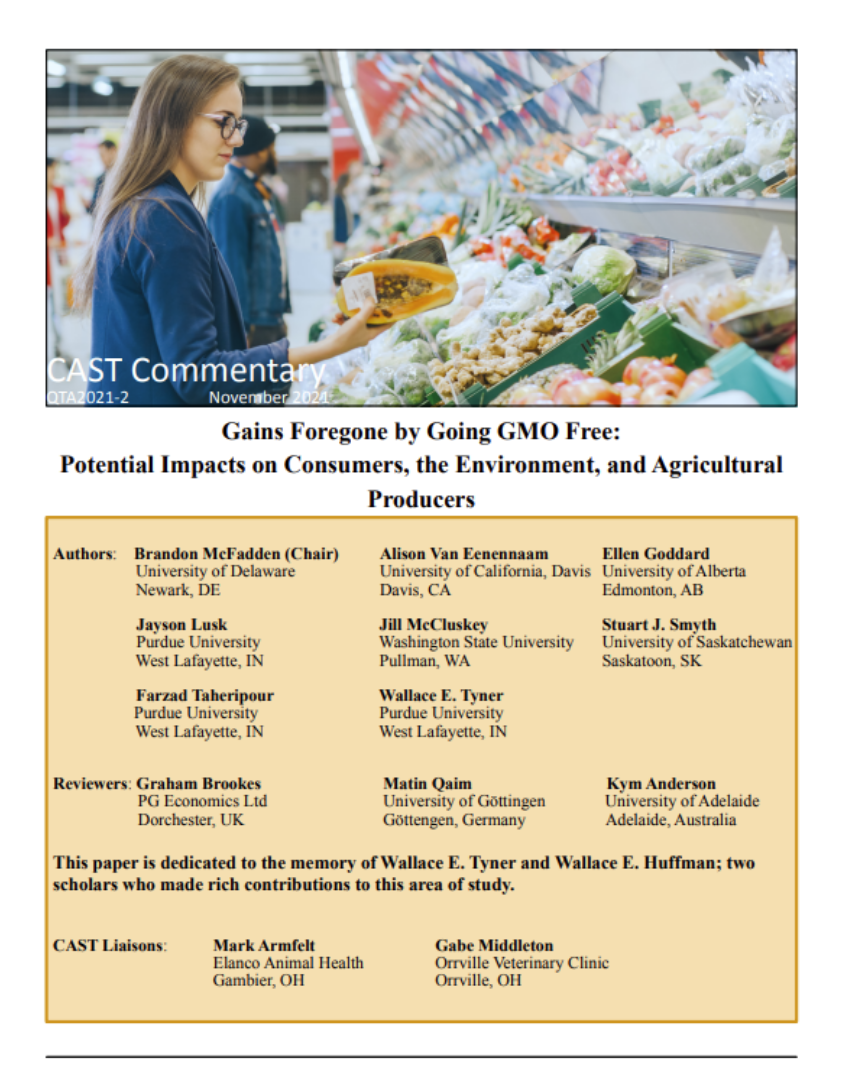
GMO-Free-pub-cover-nov.png
This paper examines the societal, environmental, and economic implications of eliminating genetically modified organisms (GMOs) from agricultural production systems. GMOs have enabled significant advancements in food security, yield stability, pest and disease management, and environmental sustainability over the past three decades.
Task Force Chairs
University of Delaware
Authors
Purdue University
Purdue University
University of California, Davis
Washington State University
Purdue University
University of Alberta
University of Saskatchewan
🔗 Publications Repository

This repository houses all official CAST papers, including final published versions, DOIs, and citation information. It serves as the permanent reference point for researchers, policymakers, educators, and media seeking trusted, citable agricultural science.

👥 Task Force Index

CAST papers are developed by interdisciplinary task forces composed of volunteer authors, chairs, reviewers, liaisons, and translators from academia, industry, and government. This index recognizes those contributors and highlights the breadth of expertise that supports CAST’s work.

✍️ Propose a Topic

CAST welcomes topic proposals that address timely, relevant issues in agriculture, food, and environmental systems. Proposed topics are reviewed in collaboration with CAST work groups and staff to assess scientific merit, relevance, and alignment with CAST’s mission.