CAST papers are the foundation of CAST’s science communication work. Developed by expert-led task forces, these peer-reviewed publications translate agricultural science into trusted insights that inform policy, guide public understanding, and fuel CAST programs, dialogues, and educational initiatives.
Search Publications
Select Year
CAST-50-Years
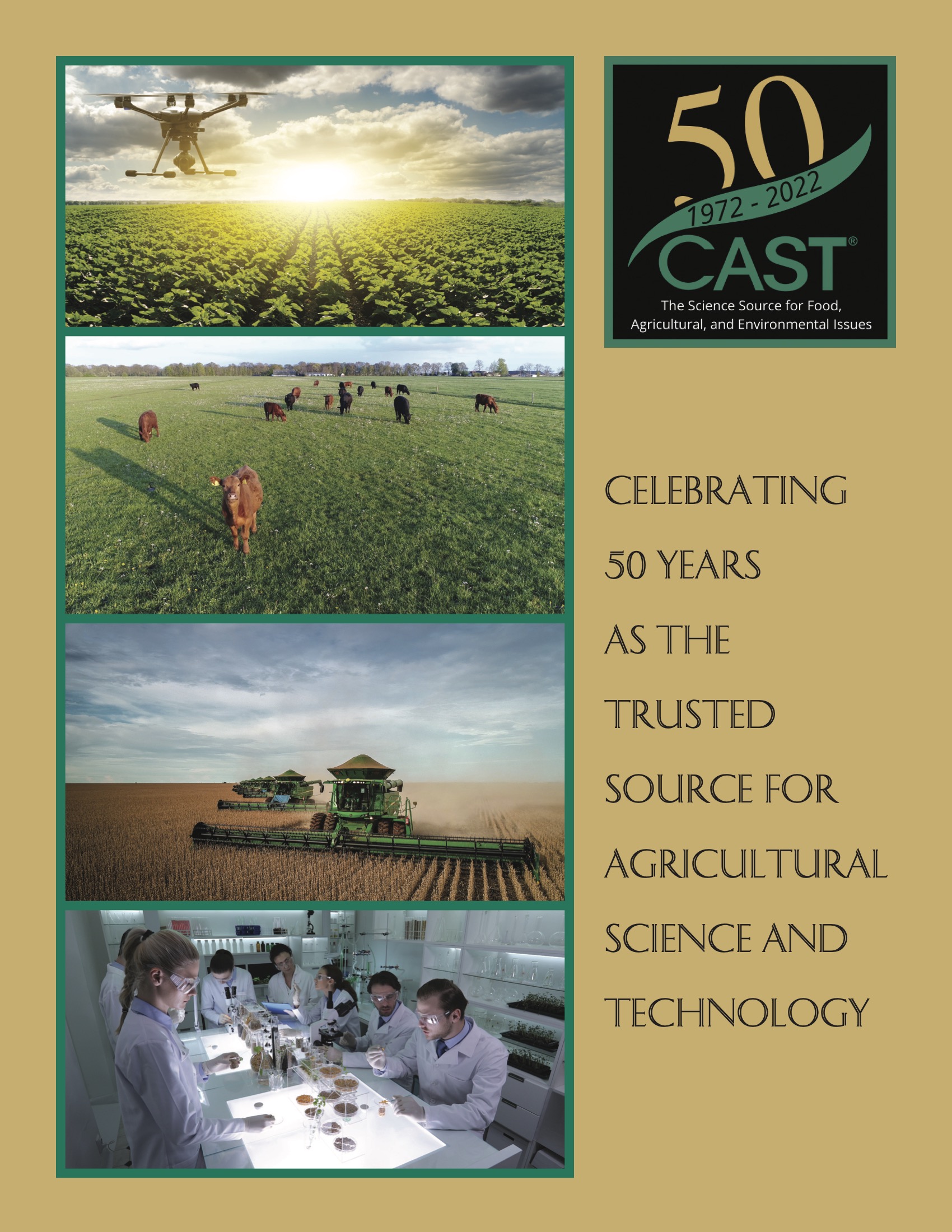
This commemorative publication celebrates the 50‑year history of the Council for Agricultural Science and Technology (CAST), tracing its evolution since its founding in 1972 as an independent, science‑based voice for agriculture.
Task Force Chairs
Authors
COVID-Impacts
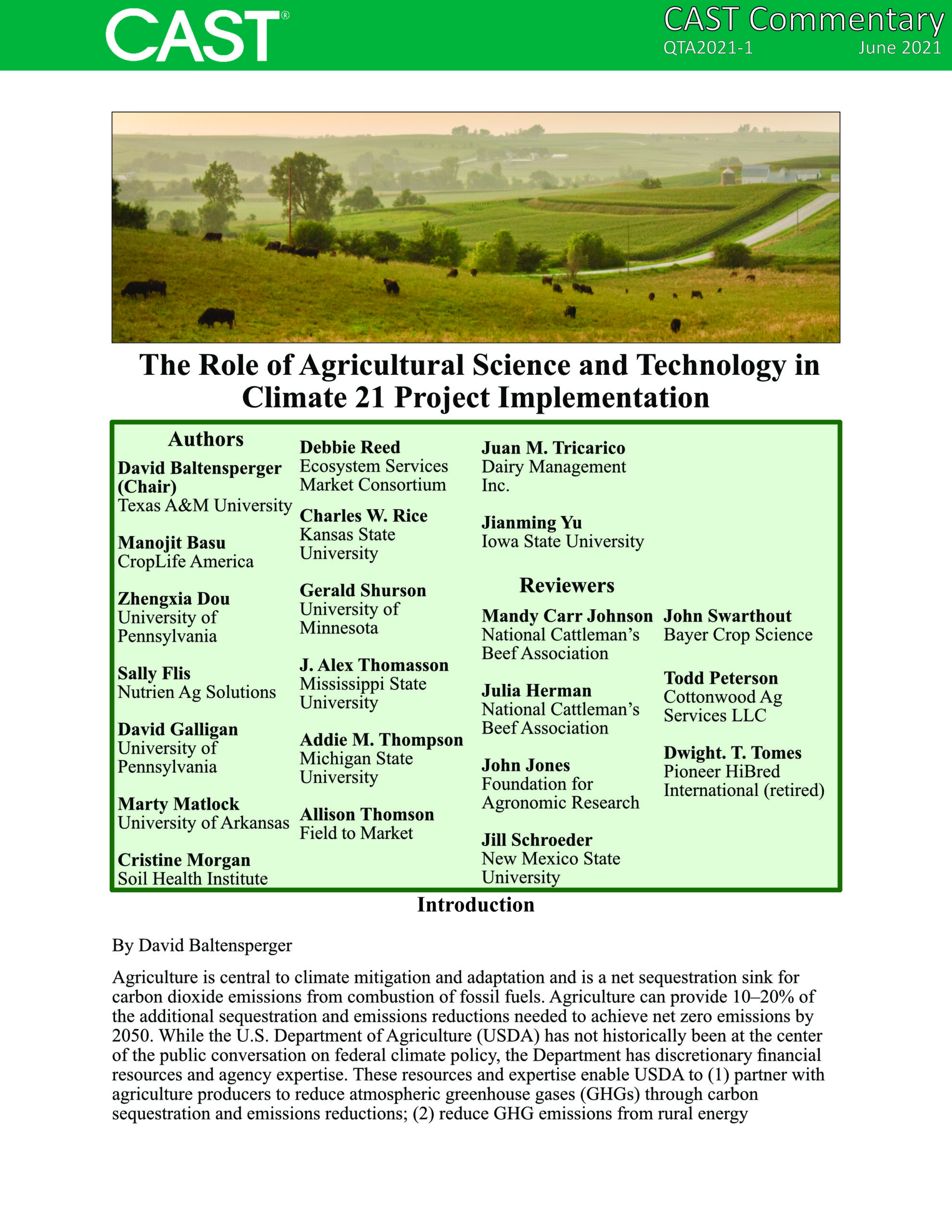
This commentary evaluates how agricultural science and technology can support implementation of the federal Climate 21 Project, which positions the U.S. Department of Agriculture as a central actor in national climate mitigation and resilience strategies. Agriculture and forestry are highlighted as the only major sectors capable of becoming net greenhouse gas sinks, offering substantial potential to help the United States reach net‑zero emissions by 2050 through soil carbon sequestration, improved nutrient management, reduced tillage, and strengthened crop and livestock systems.
Task Force Chairs
Texas A&M University
Authors
CropLife America
University of Pennsylvania
Nutrien Ag Solutions
University of Pennsylvania
University of Arkansas
Soil Health Institute
Ecosystem Services Market Consortium
Kansas State University
University of Minnesota
Mississippi State University
Michigan State University
Field to Market
Dairy Management Inc.
Iowa State University
SummaryReport_soar_cgiar_key_findings_final
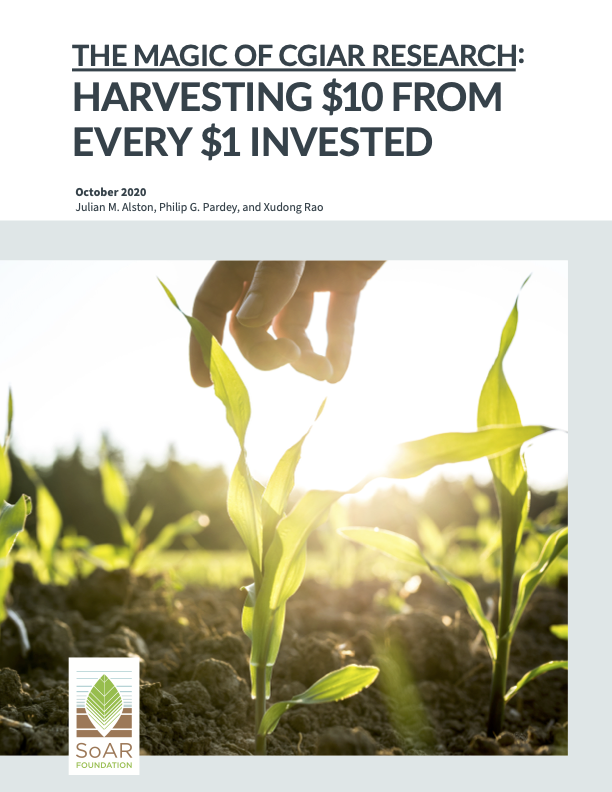
The Supporters of Agricultural Research (SoAR) Foundation released The Payoff to Investing in CGIAR Research report,coauthored by Julian M. Alston, University of California, Davis; Philip G. Pardey, University of Minnesota; and Xudong Rao, North Dakota State University. SoAR commissioned this work to examine the benefit-cost ratio of CGIAR investments.
Task Force Chairs
Authors
University of California, Davis
University of Minnesota
North Dakota State University
IP70_cover.jpg
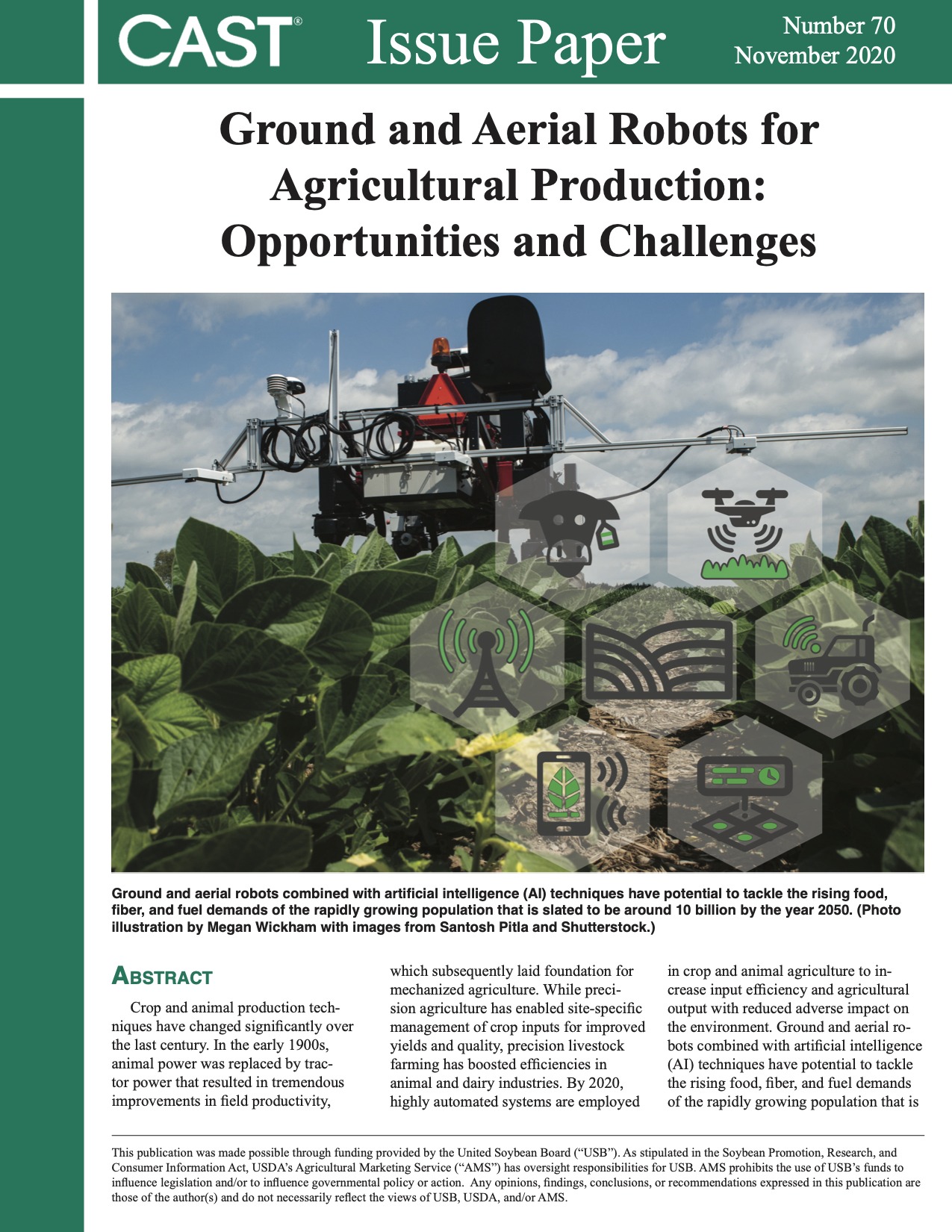
This paper examines the emerging roles of ground and aerial robotic systems—unmanned ground vehicles (UGVs), unmanned aerial systems (UASs), and robotic manipulators—in crop and livestock systems.
Task Force Chairs
University of Nebraska
Authors
Montana State University
Washington State University
Iowa State University
University of Nebraska-Lincoln
Purdue University
University of Illinois
Ohio State University
Janzen Agricultural Law, LLC
Washington State University
DeLaval
Mississippi State University
University of Kentucky
University of Missouri
Ohio State University
Mississippi State University
IP69-cover-image.png
This paper synthesizes nearly two decades of evidence from the HarvestPlus program and partner institutions on the development, bioavailability, efficacy, and large‑scale dissemination of biofortified crops.
Task Force Chairs
International Food Policy Research Institute
Authors
HarvestPlus
HarvestPlus
Cornell University
Cornell University
International Potato Center
Cornell University
HarvestPlus
HarvestPlus
HarvestPlus
University of Göttingen
HarvestPlus
Purdue University
European Commission
Ghent University
Ghent University
Ghent University
Cornell University
Developing-Global-Priorities-for-Plant-Research2_October_2020
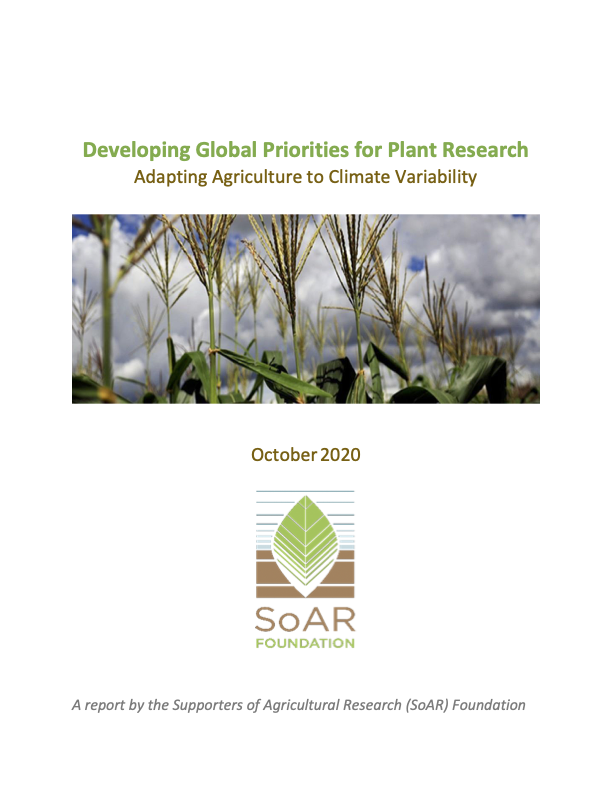
This report synthesizes insights from leading plant scientists across the United States, Europe, and China to establish global research priorities aimed at helping agriculture adapt to accelerating climate variability.
Task Force Chairs
Authors
ETH Zurich
Boyce Thompson Institute
Bayer Crop Science
University of East Anglia
University of Cambridge
Huazhong Agricultural University
University of California, Davis
BGI Group
University of Melbourne
Chinese Academy of Sciences
QTA2020-5-Misinformation
https://doi.org/10.62300/dxvbpv47
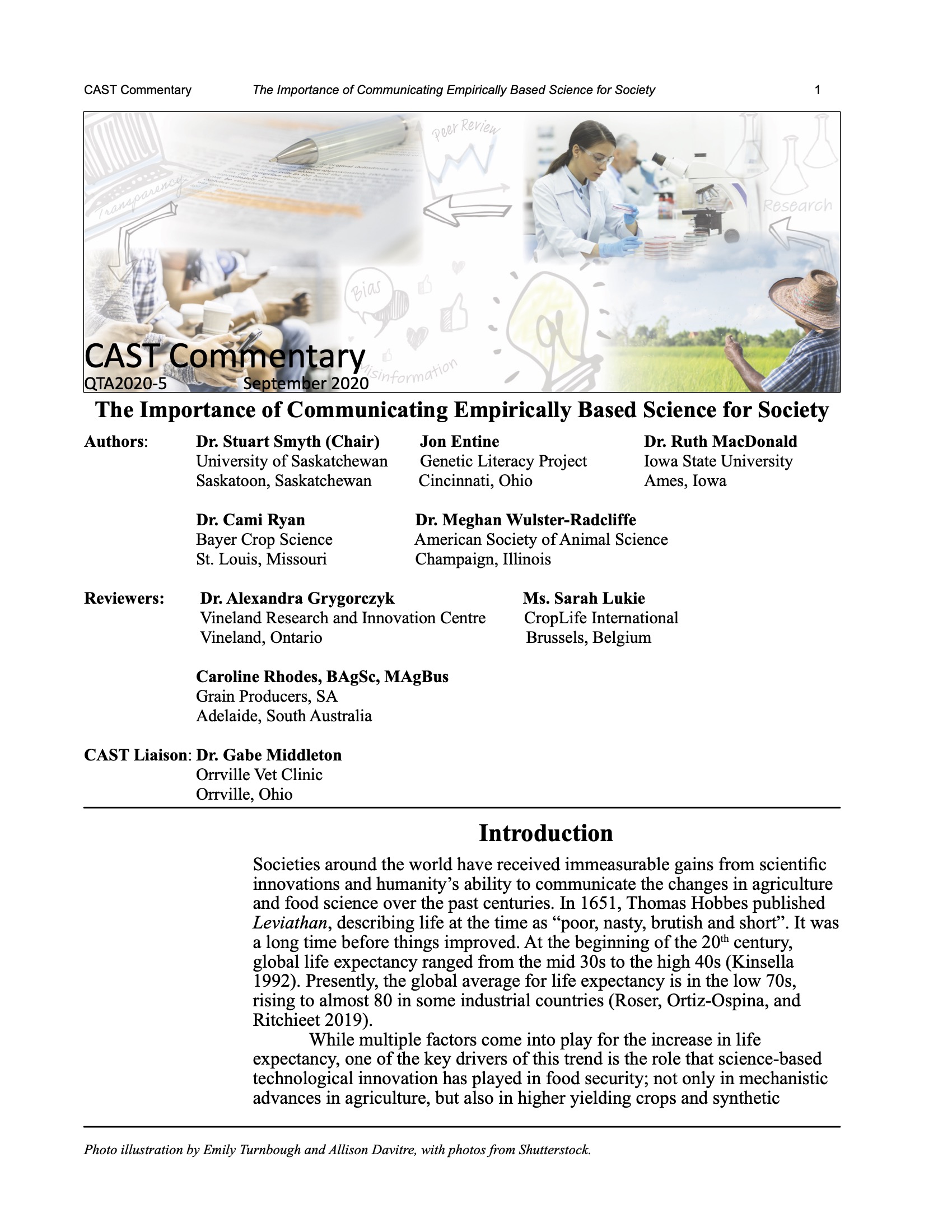
This commentary examines the growing societal challenges posed by misinformation in an era where scientific advances have dramatically improved human health, food security, and quality of life. Despite the proven benefits of empirically based science—from vaccines and antibiotics to modern crop biotechnology—public trust in science is being eroded by the rapid spread of inaccurate and sensationalized information, amplified by digital media and activist-driven narratives.
Task Force Chairs
University of Saskatchewan
Authors
Bayer Crop Science
Genetic Literacy Project
American Society of Animal Science
Iowa State University
CAST-IP52_Precautionary-Principle.jpg
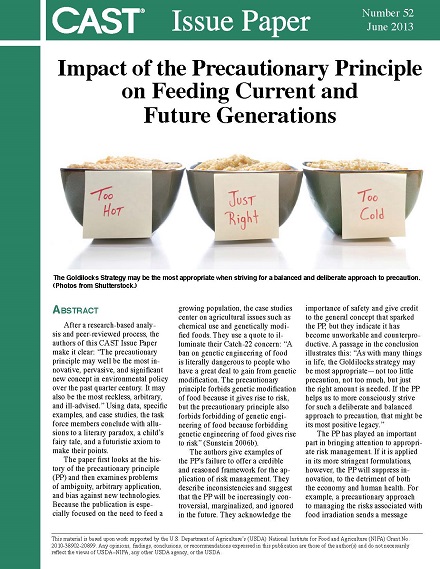
Este documento analiza críticamente el Principio Precautorio (PP) y su creciente influencia en las políticas relacionadas con los alimentos y la agricultura. Aunque el PP surgió como una herramienta destinada a proteger la salud humana y el ambiente ante la incertidumbre científica, los autores muestran que, en la práctica, su ambigüedad, falta de criterios claros y aplicación arbitraria lo han convertido en un obstáculo para la innovación y la seguridad alimentaria.
Task Force Chairs
Arizona State University
Authors
Washington State University
Microbiome_cover-image
Task Force Chairs
Authors
🔗 Publications Repository

This repository houses all official CAST papers, including final published versions, DOIs, and citation information. It serves as the permanent reference point for researchers, policymakers, educators, and media seeking trusted, citable agricultural science.

👥 Task Force Index

CAST papers are developed by interdisciplinary task forces composed of volunteer authors, chairs, reviewers, liaisons, and translators from academia, industry, and government. This index recognizes those contributors and highlights the breadth of expertise that supports CAST’s work.

✍️ Propose a Topic

CAST welcomes topic proposals that address timely, relevant issues in agriculture, food, and environmental systems. Proposed topics are reviewed in collaboration with CAST work groups and staff to assess scientific merit, relevance, and alignment with CAST’s mission.